
Field notes · November 5, 2026
Weight-Space Programming for Educational Model Editing
Researchers from MIT CSAIL demonstrated that a frontier model can directly edit the weights of a smaller open-source model, raising its MATH-500 score from 7.9% to 48.1%. This technique of weight-space programming suggests new paradigms for
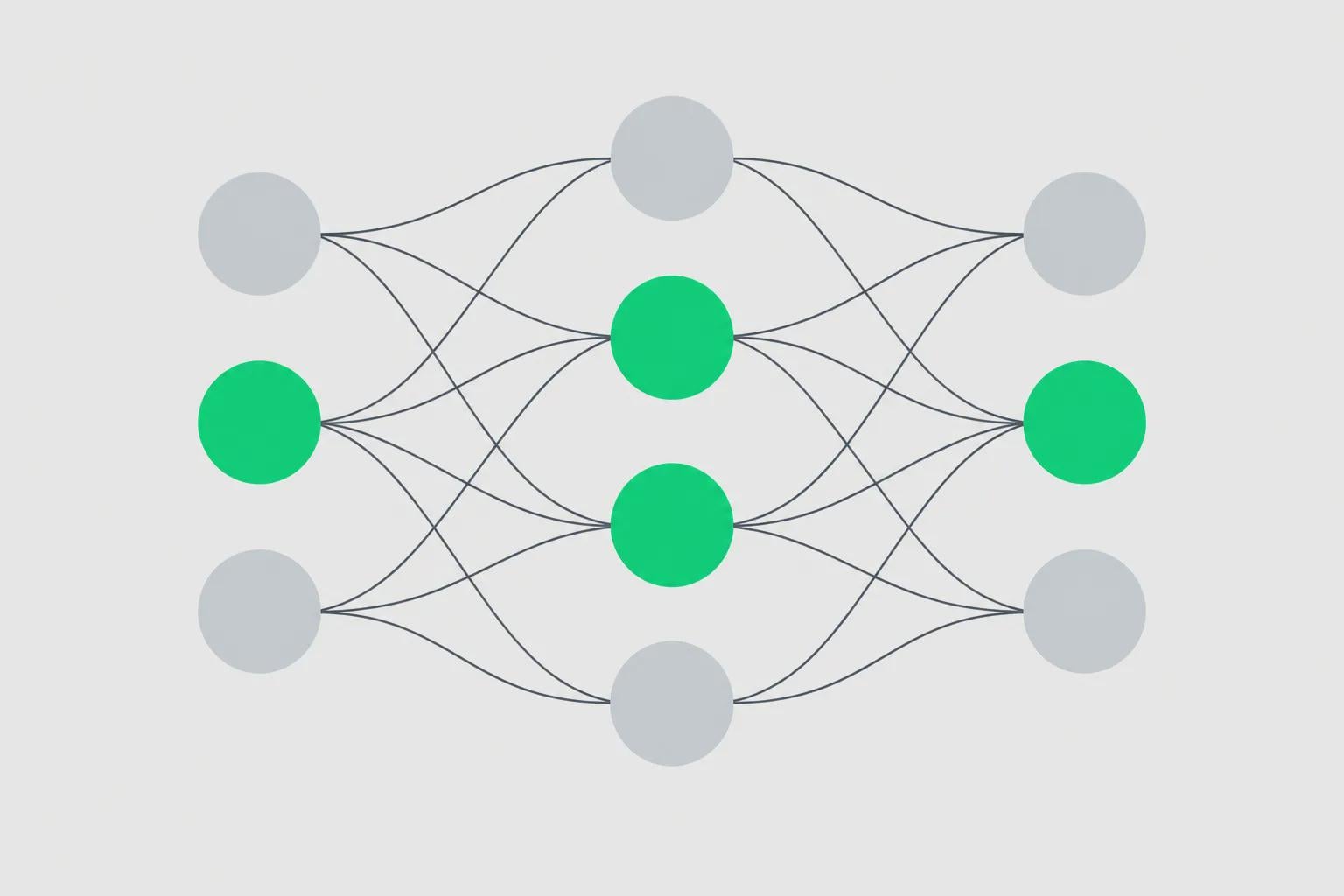
A recent report published by ExplainX AI details findings originating from researchers at MIT CSAIL in 2026 concerning a technique described as weight-space programming. According to the source, a frontier artificial intelligence system identified as GPT-6 Astra was utilized to directly edit the neural network weights of Qwen3-5-0.8B, a relatively small open-source language model. The primary metric reported for this intervention was performance on the MATH-500 benchmark, a standard evaluation dataset for mathematical reasoning. The source states that prior to the weight edits, the Qwen model achieved a score of 7.9 percent on this benchmark. Following the direct weight modifications executed by the frontier model, the same Qwen model's performance increased to 48.1 percent. The report characterizes this process not as traditional fine-tuning or prompt engineering, but as a form of programmatic editing where one model manipulates the internal parameter space of another to induce specific behavioral and capability changes. The discussion surrounding this result, which generated significant commentary in open-source communities, frames the achievement as a demonstration of models acting as optimizers for other models at the most fundamental architectural level.
The theoretical mechanism underlying this result diverges significantly from conventional approaches to adapting language models for specific tasks. Standard adaptation typically relies on gradient descent during fine-tuning, where a model is exposed to thousands of examples and its weights are updated iteratively to minimize a loss function. Alternatively, retrieval-augmented generation appends external information to the context window without altering the model's parameters. Weight-space programming, as described in the MIT CSAIL report, represents a third paradigm. In this framework, the frontier model functions as a hypernetwork or an external optimizer. It analyzes the target model's architecture and current parameter state, and then computes a set of direct transformations to apply to those weights. The frontier model essentially writes a program where the output is not text or code in a traditional sense, but a modified tensor configuration for the smaller model. This implies that the larger model possesses an internal representation of how mathematical reasoning capabilities map onto the specific topological structure of the smaller model's weights, allowing it to surgically enhance those pathways without requiring the smaller model to undergo a standard training loop.
However, the limits of the evidence presented in the source must be carefully delineated before extrapolating to broader applications. The reported improvement is measured exclusively on the MATH-500 benchmark. While a jump from 7.9 percent to 48.1 percent is substantial, mathematical problem-solving benchmarks often possess structural regularities that may be more susceptible to targeted weight manipulation than open-ended linguistic tasks such as essay generation or nuanced pedagogical dialogue. It remains unclear from the cited report whether this weight-editing process generalizes to other domains, such as reading comprehension, historical analysis, or scientific explanation, which are equally critical in educational contexts. Furthermore, the mechanism by which the frontier model identifies the correct weight adjustments is not fully transparent. If the edits merely align the smaller model's outputs with patterns recognized by the larger model, there is a risk of overfitting to the benchmark's specific distribution rather than instilling genuine mathematical reasoning. Additionally, the computational cost and latency of employing a frontier model to edit a smaller model's weights must be weighed against the efficiency of simply querying the frontier model directly, particularly if the editing process requires multiple iterative attempts to achieve the desired accuracy.
When the link between weight-space programming and educational technology is treated as real and scalable, the implications for teaching and learning with AI are profound. Currently, deploying specialized AI tutors in educational settings often requires institutions to either rely on expensive API calls to large proprietary models or invest significant computational resources into fine-tuning smaller open-source models on domain-specific curricula. Weight-space programming offers a potential alternative: using a highly capable model to rapidly and precisely configure smaller, locally hosted models for specific pedagogical tasks. For instance, an educator could theoretically use a frontier model to edit the weights of a small local model to specialize it entirely in introductory algebraic concepts, ensuring that the model's responses are tightly constrained to the curriculum without the hallucination risks associated with general-purpose models. This approach aligns with theories of distributed cognition, where the cognitive labor of configuring the learning environment is offloaded to a more capable systemic agent.
Moreover, this technique introduces new considerations regarding equity and access in educational AI. Small open-source models like the 0.8 billion parameter variant mentioned in the report are designed to run on consumer-grade hardware, making them accessible to under-resourced schools. However, their baseline capabilities are often insufficient for complex instructional tasks. If weight-space programming can reliably elevate these small models to perform adequately on rigorous benchmarks, it bridges the gap between accessibility and capability. Schools would not need continuous internet access to massive cloud servers to provide high-quality AI-assisted instruction; they would only need intermittent access to a frontier model to periodically update and optimize their local educational agents. Nevertheless, this also raises concerns about epistemic control. If the pedagogical alignment of a local tutor is dictated entirely by the weight-editing decisions of a proprietary frontier model, educators cede a degree of curricular authority to the developers of that frontier system. The values, biases, and instructional philosophies embedded in the larger model's optimization strategy would be permanently baked into the smaller model's weights, bypassing the transparency usually afforded by reviewing training data or fine-tuning prompts. Therefore, while weight-space programming presents a technically remarkable method for enhancing educational AI, its deployment requires rigorous frameworks to ensure that the resulting models serve pedagogical goals defined by educators rather than solely by the optimizing algorithms of frontier systems.
Source: GPT-6 Astra Edits Qwen Weights: MATH-500 7.9% to 48.1%