
Field notes · October 17, 2026
Token Economics and Subagent Scaling in AI Code Generation
A developer reports that generating a software application required 2.6 billion tokens, 163 subagents, and an estimated $2,650 at API rates, challenging assumptions about the triviality of AI-assisted programming.
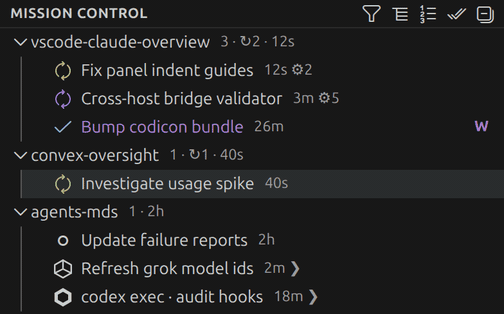
A recent practitioner report published on the r/ClaudeAI forum details the computational resources required to develop a software application named SessionDeck using large language models. The author states that the initial development process spanned eighty-one days and consumed approximately 2.6 billion tokens generated by Anthropic’s Claude model, alongside 574 million tokens from OpenAI’s Codex model. The architecture of this development effort relied on 163 distinct subagents. The author notes that because they utilized standard consumer subscription plans for both services, they paid flat monthly fees rather than metered costs; however, they estimate that if the same token volume had been processed through standard application programming interface (API) billing rates, the total expenditure would have been roughly $2,650. Furthermore, the author highlights that the most significant operational constraint was not the financial cost but the weekly usage limits imposed by the subscription tiers. The post was explicitly framed as a response to previous community comments suggesting that rebuilding such an application would be a trivial task of simply prompting the model to recreate it.
This empirical account provides a valuable data point for analyzing the mechanics and limitations of agentic code generation. The reliance on 163 subagents indicates that the development did not proceed through a single, monolithic conversational thread. Instead, it suggests a distributed workflow wherein discrete tasks were delegated to specialized or isolated agent instances. This mechanism is necessary because current large language models operate within finite context windows. When a software project exceeds the token capacity of a single context window—which occurs rapidly in any non-trivial application—the state of the codebase must be fragmented. Subagents allow developers to parallelize tasks or sequentially address specific modules without overwhelming the primary context, though this introduces substantial coordination overhead. The sheer volume of 2.6 billion tokens further illustrates the iterative nature of machine-generated code. Tokens are consumed not only in the final output but in the continuous cycle of prompting, error generation, debugging, and refactoring that characterizes human-AI collaborative programming.
The evidence presented in this report carries inherent limitations. It constitutes a single, self-reported case study from an anonymous practitioner rather than a controlled, reproducible experiment. The exact nature of the 163 subagents—whether they were manually instantiated by the developer or automatically spawned by an orchestration framework—is not specified. Additionally, the translation of subscription-based usage into an estimated $2,650 API cost relies on external pricing assumptions that may fluctuate based on model versions, tiered API pricing, or caching mechanisms. Nevertheless, the scale of the reported figures aligns with broader industry observations regarding the compute intensity of agentic workflows, lending plausibility to the account even if precise replication is impossible.
For educational contexts, particularly in computer science and software engineering instruction, these findings challenge a growing pedagogical assumption that AI code generation renders traditional programming instruction obsolete. The community response cited by the author—summarized as "just ask Claude to rebuild it"—reflects a misconception that natural language interfaces abstract away the complexity of software architecture. The reality documented in the log demonstrates that orchestrating AI to build functional software requires sustained effort, architectural planning, and resource management over an extended period. Eighty-one days of development time indicates that the human operator remained deeply engaged in problem-solving, system design, and agent management throughout the lifecycle of the project.
When integrating AI coding tools into curricula, educators must therefore shift focus from simple prompt-and-response exercises toward the systemic management of AI resources. Students need to understand the economics of token consumption, as the difference between a subscription plan and API billing represents a critical professional competency. If a student project inadvertently scales to billions of tokens in a production environment, the financial implications are severe. Teaching students to monitor token usage, optimize prompts for brevity and precision, and understand the cost structures of different inference providers prepares them for the economic realities of modern software development.
Furthermore, the use of 163 subagents implies that students must learn principles of task decomposition and multi-agent orchestration. Rather than treating the AI as a singular oracle, learners should be taught to conceptualize it as a workforce requiring management. This involves defining clear boundaries for individual agents, managing state across disparate context windows, and synthesizing outputs from multiple sources. These skills map closely to traditional systems engineering and project management competencies, suggesting that AI does not replace the need for foundational computer science education but rather elevates the level of abstraction at which students must operate.
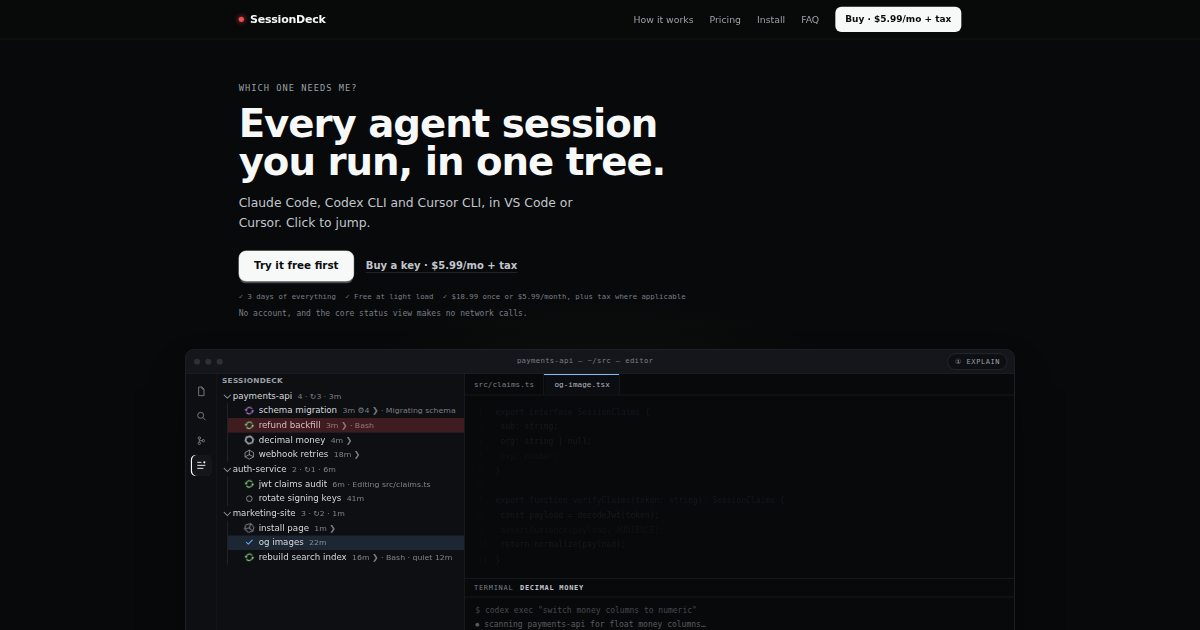
Finally, the author’s identification of weekly usage limits as the primary bottleneck highlights an infrastructural constraint that directly impacts learning environments. In educational settings where institutions provide shared access to AI tools, rate limits can abruptly halt student progress during critical assessment periods. Educators designing AI-integrated syllabi must account for these platform-level constraints, potentially by structuring assignments to distribute token consumption over time or by securing institutional agreements that mitigate arbitrary usage caps. The SessionDeck log serves as a practical reminder that the theoretical capabilities of generative AI are always mediated by the material and economic constraints of the platforms hosting them.