
Field notes · October 11, 2026
Reverse Engineering Generative UI: Implications for Local AI in Education
A community analysis on r/LocalLLaMA details how OpenAI's generative UI feature was reverse engineered within twenty-four hours, demonstrating that local large language models can replicate dynamic interface generation. This finding suggest
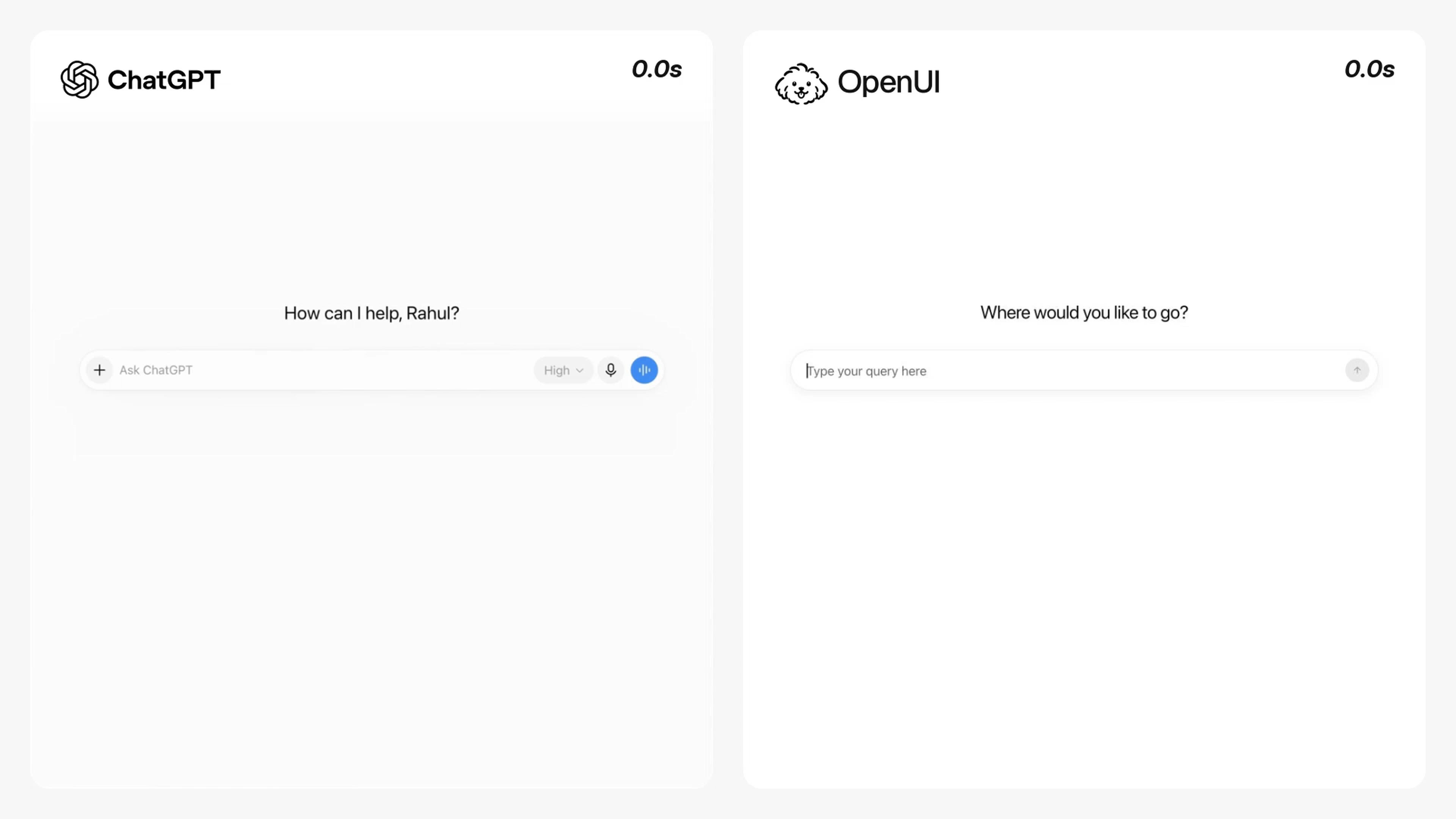
A recent discussion thread on the r/LocalLLaMA community forum, comprising seventy-five comments, highlights a technical breakdown of OpenAI’s newly launched 'intelligent UI' feature for ChatGPT. According to the post, this intelligent UI represents OpenAI’s implementation of generative user interfaces. Rather than restricting large language model responses to plain text or markdown formatting, the system enables the model to compose actual interactive interfaces in real time. The central claim of the forum post is that this capability was reverse engineered by independent developers in less than twenty-four hours following its release. Furthermore, the author asserts that the underlying mechanics of this generative UI can be recreated using local large language models, thereby removing the necessity of relying on OpenAI’s proprietary cloud-hosted infrastructure to achieve similar results. The post directs readers to the ChatGPT platform at http://chatgpt.com as the primary site where the intelligent UI feature was originally observed and subsequently analyzed.
The theoretical mechanism underpinning generative UI diverges significantly from traditional chatbot architectures. In standard implementations, a large language model generates a sequence of tokens that are rendered as unformatted text or parsed into basic structural elements such as headers, lists, and bold typography via markdown. Generative UI, by contrast, involves the model outputting structured code—typically component definitions in frameworks like React or serialized JSON schemas—that a client-side application interprets and renders as interactive graphical elements. These elements might include data visualizations, input forms, sliders, or tabbed navigation menus generated dynamically in response to a user's prompt. The rapid reverse engineering reported by the r/LocalLLaMA community suggests that this process does not rely on inaccessible, highly specialized model weights unique to OpenAI. Instead, it appears to depend on prompting strategies, system instructions, or fine-tuning approaches that guide existing open-weight models to output the requisite structured code. If local models can reliably produce these component definitions, the rendering logic itself remains a standard software engineering task handled by the host application, decoupling the interface generation from the proprietary model provider.
However, the limits of the evidence presented in this community forum must be carefully acknowledged. A Reddit thread with seventy-five comments constitutes anecdotal and crowdsourced engineering discourse rather than peer-reviewed empirical research. The claim that the feature was reverse engineered in under twenty-four hours indicates speed of replication but does not guarantee parity in quality, reliability, or safety. Proprietary systems often employ extensive reinforcement learning from human feedback, guardrails, and latency optimizations that are not immediately visible in a reverse-engineered prototype. Furthermore, while a local model may successfully generate the code for an interactive widget, the consistency of that generation across diverse prompts, edge cases, and varying hardware constraints remains unverified by formal benchmarking. The assertion that one 'can recreate it with local llms' likely reflects successful proofs-of-concept rather than production-ready, scalable deployments. Consequently, educators and technologists should interpret these findings as indicators of architectural feasibility rather than guarantees of immediate, frictionless adoption.
When linking this technical development to teaching and learning with artificial intelligence, the implications are substantial if the capability proves robust in practice. Current educational AI tools predominantly communicate through linear text exchanges. While effective for question-answering, text-based interfaces impose inherent cognitive constraints when students must parse complex information, manipulate variables, or engage with multimodal content. Generative UI introduces the possibility of an AI tutor that does not merely explain a concept but instantaneously constructs an interactive simulation or a tailored assessment widget to demonstrate it. For instance, a student asking about probability distributions could receive a dynamically generated histogram with adjustable parameters rather than a static textual description. This shift aligns with constructivist pedagogical theories, wherein active manipulation of learning artifacts deepens conceptual understanding.
Crucially, the reported ability to run generative UI on local large language models addresses one of the most persistent barriers to AI integration in education: data privacy and infrastructure dependency. Cloud-based AI services require student interactions to be transmitted to external servers, raising significant concerns regarding compliance with educational data protection regulations. If schools can deploy local models capable of generating interactive interfaces, they retain complete sovereignty over student data. All processing occurs on institutional or personal hardware, ensuring that sensitive queries, formative assessment results, and interaction logs never leave the local network. Additionally, local deployment mitigates the risk of service disruption caused by API rate limits, subscription costs, or corporate policy changes—factors that frequently destabilize technology-dependent lesson plans.
Nevertheless, the introduction of generative UI in educational contexts also necessitates new design considerations. Interactive components generated on the fly must be accessible to students with disabilities, requiring the local models to consistently output code compliant with accessibility standards. Teachers would also need mechanisms to constrain the types of interfaces the model can generate, preventing the creation of distracting or pedagogically misaligned elements. The rapid reverse engineering of OpenAI’s intelligent UI demonstrates that the technical barrier to dynamic, model-generated interfaces has been significantly lowered. For the educational sector, this signals a transition toward more interactive, locally governed, and cognitively responsive AI learning environments, provided that the informal engineering claims can be translated into stable, pedagogically sound applications.
Source: r/LocalLLaMA · 75 comments