
Field notes · November 4, 2026
Reasoning Effort Parameters and Educational Cost Equity
OpenAI's API documentation introduces configurable reasoning parameters that allow developers to control computational depth, raising questions about equitable access to advanced AI capabilities in educational settings.
A recent discussion on the r/ChatGPT community forum highlights user concerns regarding the potential merger of ChatGPT's conversational interface and its workspace-oriented tools under a single Pro subscription tier. The commenter explicitly asks whether users will still be able to afford Pro mode if these services are consolidated. This concern is contextualized by OpenAI's official reasoning models documentation, which details specific application programming interface (API) parameters designed to govern model behavior during complex tasks. According to the cited documentation, developers can utilize a parameter called reasoning.effort to dictate the volume of reasoning a model performs when responding to a given prompt. Additionally, the documentation specifies a separate parameter, reasoning.mode, which supports two distinct operational options: standard and pro. These technical specifications indicate that OpenAI has engineered a tiered architecture for computational reasoning, where the depth and presumably the cost of the model's processing can be programmatically adjusted.
The theoretical significance of these parameters extends beyond software engineering into the economics and pedagogy of artificial intelligence in education. The mechanism at work here is one of variable computational allocation. When an educational developer or institution sets reasoning.effort to a higher threshold or selects reasoning.mode as pro, they are instructing the underlying infrastructure to dedicate more processing cycles to the task. In large language models, deeper reasoning typically correlates with improved performance on multi-step logic, mathematical problem-solving, and nuanced textual analysis. However, this increased computational expenditure translates directly into higher operational costs, usually measured in API token consumption or subscription pricing tiers. The distinction between standard and pro modes effectively creates a bifurcated system of cognitive capability, where the quality of the AI's output is contingent upon the financial resources allocated to the request.
The limits of the current evidence must be carefully delineated. The Reddit comment represents a single user's apprehension rather than empirical data on market elasticity or institutional budget constraints. Furthermore, while the API documentation confirms the existence of reasoning.effort and reasoning.mode, it does not provide the exact cost differentials between standard and pro execution, nor does it quantify the precise pedagogical gains achieved by utilizing the pro mode over the standard mode in classroom scenarios. Without controlled studies comparing student outcomes across these two reasoning modes, any claims regarding the educational necessity of the pro tier remain speculative. The documentation establishes the technical capacity for tiered reasoning, but the educational efficacy of that capacity remains an open empirical question.
Despite these evidentiary boundaries, the implications for teaching and learning with AI are substantial when viewed through the lens of resource dependence theory and educational equity. Resource dependence theory posits that organizations, including schools and universities, are constrained by their reliance on external entities for critical resources. If advanced AI reasoning becomes a necessary component of modern pedagogy—used, for example, to generate complex formative assessments, evaluate student code, or simulate historical debates—then the pricing structure of that reasoning becomes a structural determinant of educational quality. The consolidation of chat and workspace features into a single Pro subscription, as feared by the Reddit user, could exacerbate this dependence. Institutions operating under fixed budgets may find themselves forced to ration access to reasoning.mode: pro, thereby creating a two-tiered learning environment within the same school. Students with access to higher-effort reasoning models might receive more accurate feedback and more sophisticated tutoring interactions than those restricted to standard mode.
This dynamic also intersects with theories of technological determinism in education, which examine how the inherent design of a technology shapes its adoption and impact. By hardcoding standard and pro distinctions directly into the API's reasoning architecture, the provider structurally defines what constitutes baseline versus premium intellectual assistance. Educators integrating these models into learning management systems must now make architectural decisions that carry pedagogical weight. A teacher designing an automated grading rubric must decide whether the task requires reasoning.effort set to maximum levels, balancing the need for accuracy against the depletion of departmental API credits. This transforms the educator from a purely pedagogical designer into a resource manager, constantly arbitrating between cognitive depth and financial sustainability.
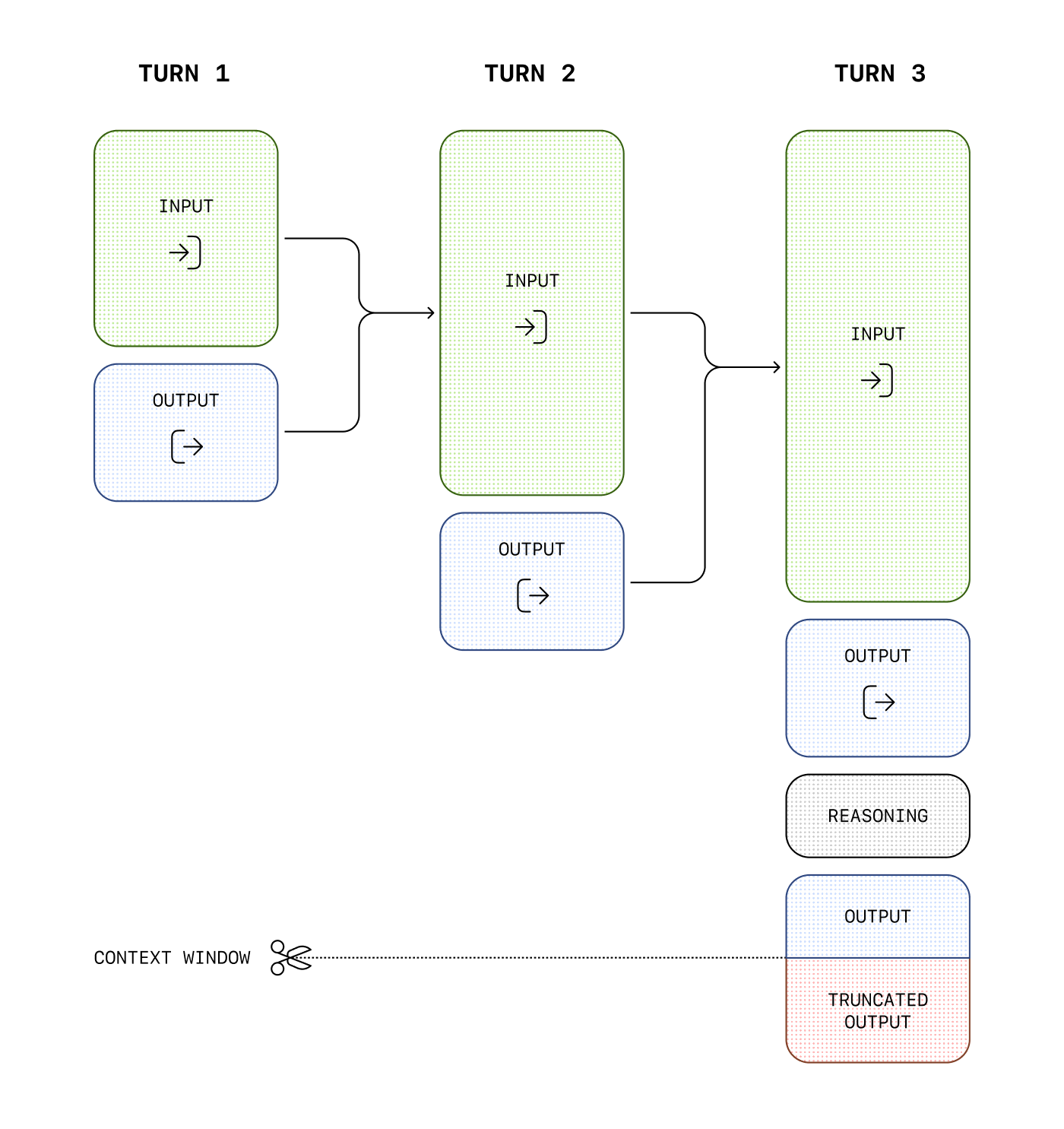
Moreover, the availability of the reasoning.effort parameter suggests a future where AI-driven instruction is dynamically throttled based on perceived task difficulty. While theoretically efficient, this approach risks algorithmic bias if the system consistently allocates lower reasoning effort to tasks associated with certain student demographics or subject areas deemed less critical. The transition from flat-rate access to granularly metered reasoning fundamentally alters the economics of AI-assisted learning. As the Reddit user's concern illustrates, the end-user experience is deeply sensitive to these backend pricing architectures. For NexEd researchers and educational technologists, monitoring how providers adjust the boundaries between standard and pro reasoning modes is essential. The democratization of AI in education relies not only on the availability of the models but on the affordability of their most capable configurations. If pro mode reasoning becomes the prerequisite for meaningful AI integration in complex subjects, then ensuring equitable access to that mode becomes a primary challenge for educational policy and institutional procurement.