
Trends · November 8, 2026
수능 Pressure and the Rise of AI Tutoring Agents
As South Korea prepares for 수능, intense exam pressure drives growing interest in AI tutoring agents and adaptive test-prep tools for students nationwide.
In South Korea, few educational events command as much national attention as the annual college entrance examination. Known formally as the College Scholastic Ability Test, or 수능, this single assessment shapes university admissions, career trajectories, and family planning for millions of students each year. The intensity surrounding the exam is not merely cultural; it is structural. According to the OECD institutional overview of South Korea's education system, the country’s deep integration of technology and its pervasive private tutoring culture—often referred to as hagwon—create an environment where demand for adaptive test-prep tools is exceptionally high. As the examination date approaches each November, search interest surges, reflecting a population deeply invested in preparation strategies. For educators and researchers observing these trends, the recurring spike in search traffic offers a window into how high-stakes testing environments catalyze interest in artificial intelligence tutoring agents and personalized learning technologies.
The pressure associated with the exam is compounded by demographic shifts and competitive dynamics that make traditional study methods feel insufficient for many students. Reporting linked to recent search trends highlights that the number of retakers—students attempting the exam for a second or third time—has reached historic highs, with approximately 200,000 repeat test-takers recorded in recent cycles. Coverage from YTN emphasizes that the Korean language section remains the most unpredictable variable for examinees, adding anxiety to an already fraught process. When hundreds of thousands of students are competing for limited seats at top universities, and when a single subject can dramatically alter outcomes, the appeal of highly individualized instruction becomes clear. This is precisely the context in which AI tutoring agents have begun to attract serious attention from both students and the educational technology sector.
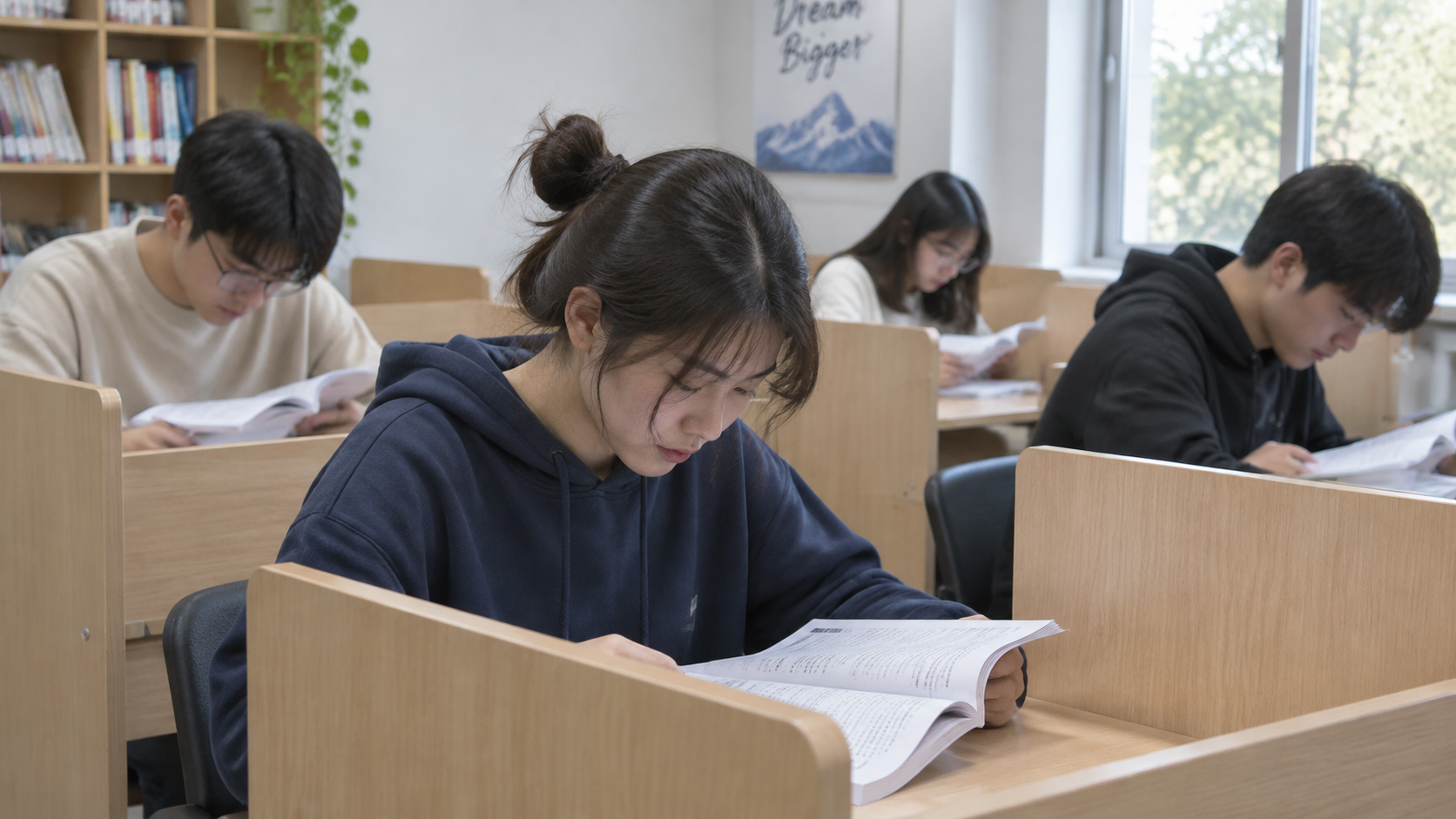
Adaptive Preparation Strategies for 수능
Traditional advice for students in the final stretch before the exam focuses heavily on routine and targeted review. Reporting from Jeju Ilbo stresses the importance of managing daily life rhythms in the ten days leading up to the test, suggesting that physical and mental regulation is as critical as academic review. Similarly, coverage from News1 advises students to maintain practical exam readiness by aligning their study schedules with the actual test timetable, reviewing materials linked to the Educational Broadcasting System, and consolidating concepts in their weakest areas. These recommendations reflect a long-standing pedagogical understanding: effective test preparation requires personalization. Students must identify their specific vulnerabilities and allocate time accordingly.
However, executing this level of personalized review without dedicated support is difficult. In a standard classroom or even a large hagwon setting, instructors cannot continuously adjust materials for every individual student’s weak points in real time. This gap between the ideal of personalized preparation and the reality of scaled instruction is where AI tutoring agents offer a distinct advantage. Adaptive test-prep tools powered by machine learning can analyze a student’s performance across thousands of practice questions, identifying patterns of error that might escape human notice. By dynamically adjusting the difficulty and focus of subsequent problems, these systems attempt to replicate the benefits of one-on-one tutoring at a scale that traditional infrastructure struggles to match. The OECD overview notes that South Korea’s broader educational ecosystem is uniquely positioned to adopt such technologies, given the country’s existing reliance on supplementary education and its advanced digital infrastructure.

The Role of AI Tutoring Agents in High-Stakes Testing
The integration of AI into test preparation is not simply a matter of automating flashcards. Modern tutoring agents are designed to model student knowledge states, adapting their instructional strategies based on continuous feedback loops. When a student struggles with the complex reading comprehension passages characteristic of the Korean language section—the very area identified by YTN as the greatest variable in recent exams—an adaptive agent can isolate whether the difficulty stems from vocabulary deficits, logical reasoning gaps, or time management issues. This granular diagnostic capability represents a significant shift from static prep books to interactive, responsive learning environments.
For researchers studying educational technology, the search trends surrounding the national exam provide valuable data on user intent. When search volumes rise above 1,000 queries in a tracked period, it signals more than casual curiosity; it reflects active, urgent information-seeking behavior among students, parents, and educators. The nature of these searches often shifts in the weeks before the exam, moving from general inquiries about registration or dates toward specific requests for last-minute study strategies, concept reviews, and increasingly, digital tools that promise efficient preparation. News1’s emphasis on organizing study around EBS-linked materials and vulnerable concepts mirrors the exact parameters that adaptive algorithms are designed to optimize. An AI agent can ingest the scope of these broadcast-linked textbooks and map them directly to a student’s demonstrated weaknesses, creating a bespoke study path that honors the expert advice while delivering it through an automated interface.
Furthermore, the psychological dimensions of exam preparation cannot be ignored. The advice from Jeju Ilbo regarding the management of daily rhythms underscores the stress inherent in the process. AI tutoring agents, when designed with pedagogical care, can help mitigate some of this anxiety by providing predictable, structured interactions. Rather than facing an overwhelming mountain of unorganized review materials, a student interacting with an adaptive system receives a curated sequence of tasks. This reduction in cognitive load allows the student to focus energy on mastery rather than planning. Researchers interested in how these tools affect student well-being and self-regulation during high-stakes periods may find frameworks like the Classroom Observatory useful for structuring their investigations into AI-mediated study behaviors.
Implications for Educators and EdTech Developers
The convergence of a high-stakes national exam, a record number of retakers, and a technologically mature society creates a unique laboratory for educational innovation. The persistent search interest in the exam demonstrates that the demand for effective preparation tools is both massive and cyclical. For developers of AI tutoring agents, this market demands systems that are not only technically sophisticated but also deeply aligned with the specific curricular standards and pedagogical expectations of the South Korean education system. Generic language models are insufficient; the tools must understand the precise format of the Korean language section, the mathematical reasoning required, and the specific ways in which EBS materials intersect with the actual test.
Ultimately, the search trends surrounding the national college entrance exam reveal a fundamental tension in modern education. The exam itself is a standardized, uniform assessment applied to an entire nation of students. Yet, the most effective preparation for that uniform assessment is inherently individualized. AI tutoring agents and adaptive test-prep tools represent an attempt to resolve this tension, offering personalized pathways toward a common destination. As long as the exam continues to serve as the primary gateway to higher education in South Korea, the interest in technologies that promise a competitive edge will only deepen, driving further research and development at the intersection of artificial intelligence and pedagogy.