
Field notes · October 31, 2026
Pixel-Level Control in Latent Diffusion Models
Researchers at the University of Rochester have developed a method to correct AI-generated images pixel by pixel without disrupting unrelated details, addressing a persistent limitation of latent diffusion models. This advancement holds imp
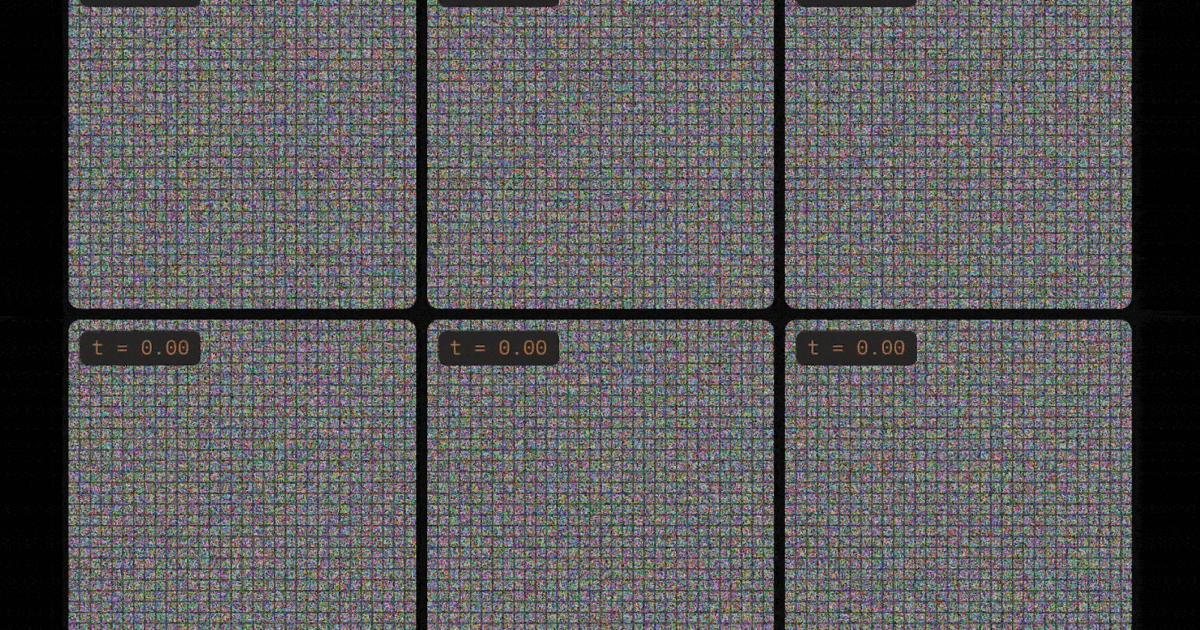
A recent report from the University of Rochester details a new approach to correcting errors in AI-generated images, addressing a widely recognized frustration among users of text-to-image generators such as ChatGPT and Google Gemini. According to the university’s news release, users frequently encounter situations where an image appears nearly perfect, but requesting the artificial intelligence system to fix one small detail inadvertently alters or degrades unrelated elements of the composition. The source attributes this issue to the underlying architecture of most state-of-the-art image generators, which rely on diffusion models operating in latent space. In these systems, visual concepts—such as a cat or a dog—are compressed into lower-dimensional representations before the image is synthesized. The researchers at the University of Rochester have advanced a model that allows users to make precise, localized changes to generated images without unintentionally modifying other details, effectively enabling pixel-by-pixel correction.
The theoretical mechanism underlying this problem, and its proposed solution, is rooted in the mathematics of latent diffusion. Standard diffusion models generate images by learning to reverse a gradual noising process. To reduce computational costs, modern architectures perform this denoising not in the high-dimensional pixel space, but in a compressed latent space produced by a variational autoencoder. When a user requests a modification through a text prompt, the model must re-traverse this latent space to satisfy the new conditioning. Because the latent representation entangles multiple semantic concepts into shared dimensions, altering the vector corresponding to one feature—such as the color of an object—often shifts adjacent vectors that encode spatial relationships, textures, or entirely different objects. The result is a global disruption rather than a local edit. The Rochester research addresses this entanglement by developing a method to isolate specific regions within the generation process, decoupling the targeted edit from the surrounding latent structure so that the rest of the image remains invariant.
While the University of Rochester announcement outlines the practical utility of this advancement, the limits of the currently available evidence must be acknowledged. The source material provided is a summary report rather than a peer-reviewed technical manuscript, meaning the exact mathematical formulation, the quantitative benchmarks used to evaluate fidelity, and the computational overhead of the pixel-level correction method are not detailed. Furthermore, it remains unclear how this technique scales across different base architectures or whether it generalizes to highly complex, multi-object scenes where latent entanglement is most severe. Without access to the full empirical data, including standardized metrics such as Fréchet Inception Distance or localized structural similarity indices, the robustness of the method outside controlled demonstrations cannot be definitively assessed. Additionally, the report does not specify whether this technique requires retraining the base diffusion model or if it operates as a post-hoc inference-time intervention, a distinction that significantly impacts its immediate deployability.
Despite these evidentiary boundaries, the implications of reliable, localized editing in generative image models are substantial for teaching and learning with AI. In educational contexts, generative images are increasingly used to create instructional materials, visualize abstract concepts, and support project-based learning. However, the fragility of current latent diffusion models during iterative editing presents a significant barrier. When a student or educator attempts to refine an AI-generated diagram—for instance, correcting a mislabeled anatomical structure or adjusting the historical accuracy of a depicted artifact—the unintended alteration of surrounding details can introduce new inaccuracies. This unpredictability forces educators to either accept flawed outputs or abandon the tool entirely, undermining the potential of AI as a reliable medium for content creation.
The ability to execute precise, pixel-level corrections transforms the pedagogical utility of these tools by shifting the interaction paradigm from stochastic generation to deterministic refinement. From a theoretical standpoint, this aligns with principles of iterative design and constructionist learning, where the value lies not merely in the final product, but in the process of continuous, intentional revision. When students can reliably modify specific elements of an image without destabilizing the whole, they engage more deeply with the subject matter, making deliberate choices about visual representation. This precision reduces the friction associated with trial-and-error prompting, allowing learners to focus their cognitive resources on the conceptual accuracy of the material rather than on managing the unpredictable behavior of the generative model.
Moreover, this advancement has direct relevance for accessibility and differentiated instruction. Educators frequently need to adapt visual materials to meet diverse learner needs, such as simplifying a complex scene for younger students or enhancing contrast for visually impaired learners. If modifying one element of an image risks destroying the carefully curated context of the rest, such adaptations become prohibitively time-consuming. A model capable of isolated edits ensures that foundational instructional designs can be preserved while specific variables are adjusted for individual learners.
In conclusion, the research emerging from the University of Rochester highlights a critical maturation in generative AI technology. By resolving the latent entanglement problem that causes unintended alterations during image editing, this work moves text-to-image models closer to becoming dependable instruments in educational environments. While further empirical validation is required to understand the method's limitations across varied architectures and complex prompts, the capacity for pixel-level control represents a necessary step toward integrating generative imagery into rigorous instructional design workflows.