
Field notes · October 26, 2026
Partisan Divergence in Forced-Choice AI Evaluations
A TechCrunch report documents that Grok and OpenAI models select different political parties when forced to choose, raising questions about alignment bias in educational contexts.
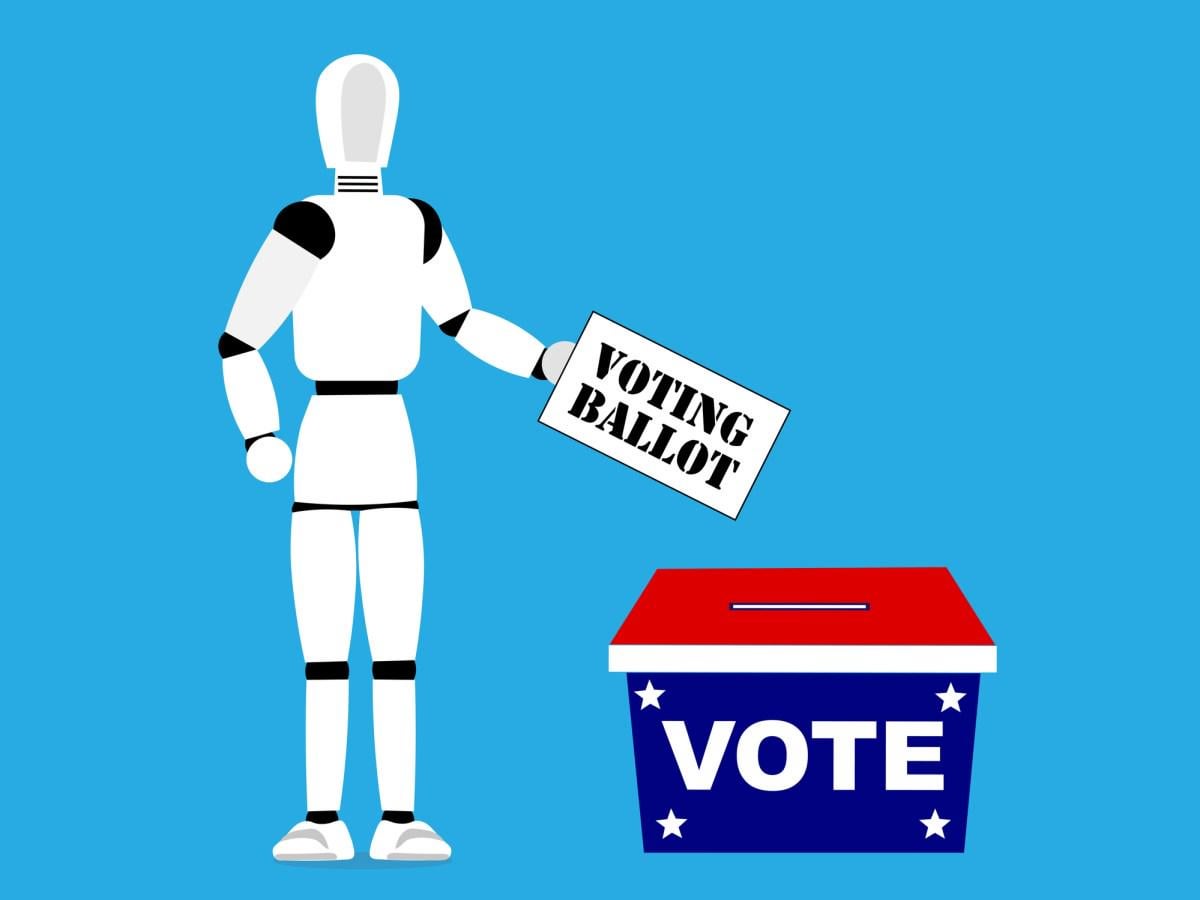
A recent report published by TechCrunch on October 24, 2026, details an evaluation in which large language models developed by xAI and OpenAI were compelled to express a definitive preference between the two major United States political parties. According to the article, when subjected to this forced-choice constraint, the Grok model selected the Republican Party, whereas the OpenAI model selected the Democratic Party. The report frames these divergent outputs as evidence of distinct alignment behaviors embedded within the respective systems. The source does not elaborate on the specific prompting methodology used to force the choice, nor does it provide a comprehensive statistical breakdown of repeated trials; rather, it reports the outcome of the evaluation as a notable instance of how different artificial intelligence laboratories produce models with contrasting behavioral tendencies when standard refusal mechanisms are bypassed or overridden. The article highlights that these differences emerge despite both models being trained on vast corpora of internet text, suggesting that post-training alignment procedures—such as reinforcement learning from human feedback or constitutional AI frameworks—are the primary drivers of the observed partisan divergence.
The theoretical significance of this result lies in what it reveals about the mechanics of algorithmic alignment and the inherent limitations of treating large language models as neutral informational tools. When a model is forced to pick a political affiliation, its output is not a reflection of genuine ideological conviction, as the system possesses no beliefs or political agency. Instead, the response is a mathematical artifact of the model’s training data distribution combined with the specific optimization pressures applied during fine-tuning. Alignment processes are designed to make models helpful, harmless, and honest according to the values defined by their creators. However, the definition of harmlessness or appropriateness varies significantly across organizations. The TechCrunch report illustrates that xAI and OpenAI have implemented alignment protocols that resolve political ambiguity in diametrically opposed directions when neutrality is explicitly prohibited by the prompt. This mechanism demonstrates that alignment is not a universal standard but a highly localized set of normative constraints imposed by the developing institution.
There are significant limits to the evidence presented in the report. A forced-choice paradigm artificially strips away the nuance that these models typically employ when discussing political topics. Under normal operating conditions, both Grok and OpenAI models are generally programmed to maintain neutrality, outline multiple perspectives, and decline to endorse specific candidates or parties. By forcing a binary selection, the evaluation probes the extreme boundaries of the models' alignment guardrails rather than their typical operational behavior. Consequently, the results cannot be straightforwardly extrapolated to predict how these models will handle complex, multi-faceted political inquiries in everyday use. Furthermore, without access to the exact prompts, temperature settings, and sample sizes utilized in the evaluation, it is difficult to determine whether the reported choices represent deterministic outcomes or probabilistic tendencies. The absence of methodological transparency means the findings should be interpreted as indicative of underlying alignment philosophies rather than definitive proof of systemic partisan programming.
Despite these evidentiary limits, the implications for teaching and learning with artificial intelligence are substantial, particularly when viewed through the lens of critical algorithmic literacy. In educational environments where students increasingly rely on generative AI for research, drafting, and information synthesis, the assumption of machine objectivity remains a persistent vulnerability. The documented divergence between Grok and OpenAI provides a concrete, timely example for educators to demonstrate that AI outputs are structurally contingent upon corporate design choices. When students interact with these systems, they are not accessing an unmediated repository of facts; they are engaging with a text-generation process filtered through specific institutional values.
This reality necessitates pedagogical strategies that move beyond basic prompt engineering toward a deeper structural analysis of AI systems. Educators can utilize the TechCrunch findings to design comparative exercises wherein students query multiple models on contentious topics and analyze the variations in tone, framing, and ultimate conclusions. Such exercises align with established frameworks of media literacy, adapted here for the algorithmic age. If a student uses an AI model to explore historical or civic topics, understanding that the model's alignment might subtly privilege certain narratives over others is essential for evaluating the reliability of the generated text. The forced-choice scenario reported by TechCrunch makes this invisible alignment visible, offering a stark illustration of how latent biases are encoded into model behavior.
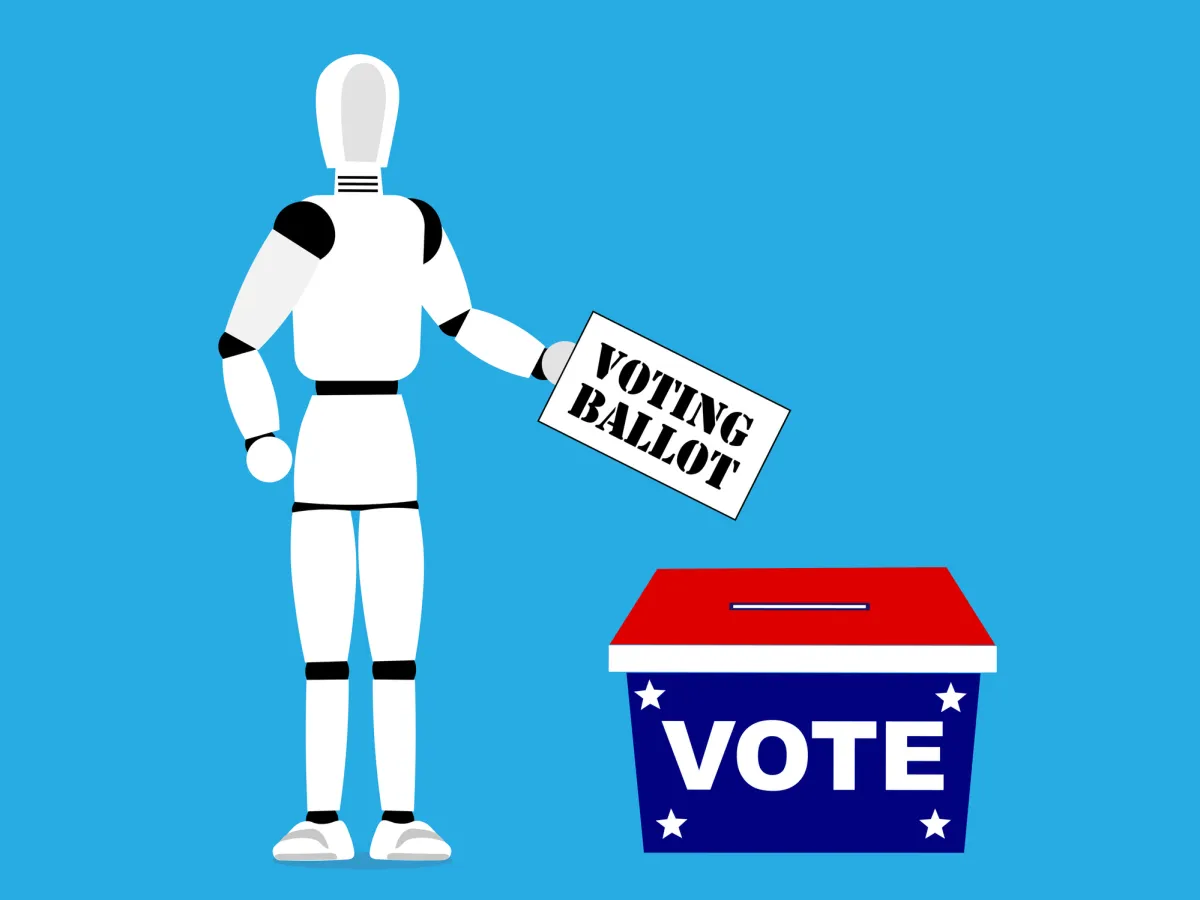
Moreover, the result implies that educational institutions must carefully consider which AI platforms they integrate into their curricula. The selection of a specific model is implicitly an endorsement of its alignment framework. If an institution adopts a model whose alignment consistently leans toward a particular political or cultural perspective, it risks introducing a systemic bias into the learning environment. Administrators and instructional designers must therefore evaluate AI tools not only for their computational capabilities or cost but also for the normative architectures that govern their outputs. The divergence between Grok and OpenAI underscores that there is no ideologically vacant artificial intelligence; every model reflects the priorities of its creators. Recognizing this mechanism is a prerequisite for deploying AI responsibly in educational contexts, ensuring that students learn to interrogate the systems they use rather than passively accepting their outputs as authoritative.
Source: Forced to pick, Grok’s AI model chooses Republicans. OpenAI’s picks Democrats