
Field notes · October 19, 2026
Parallel Agent Execution in GPT-6 Pro
OpenAI has introduced a parallel multi-agent architecture to GPT-6 Pro within ChatGPT, enabling concurrent sub-task execution. This research log examines the reported mechanism and its theoretical implications for distributed problem-solvin
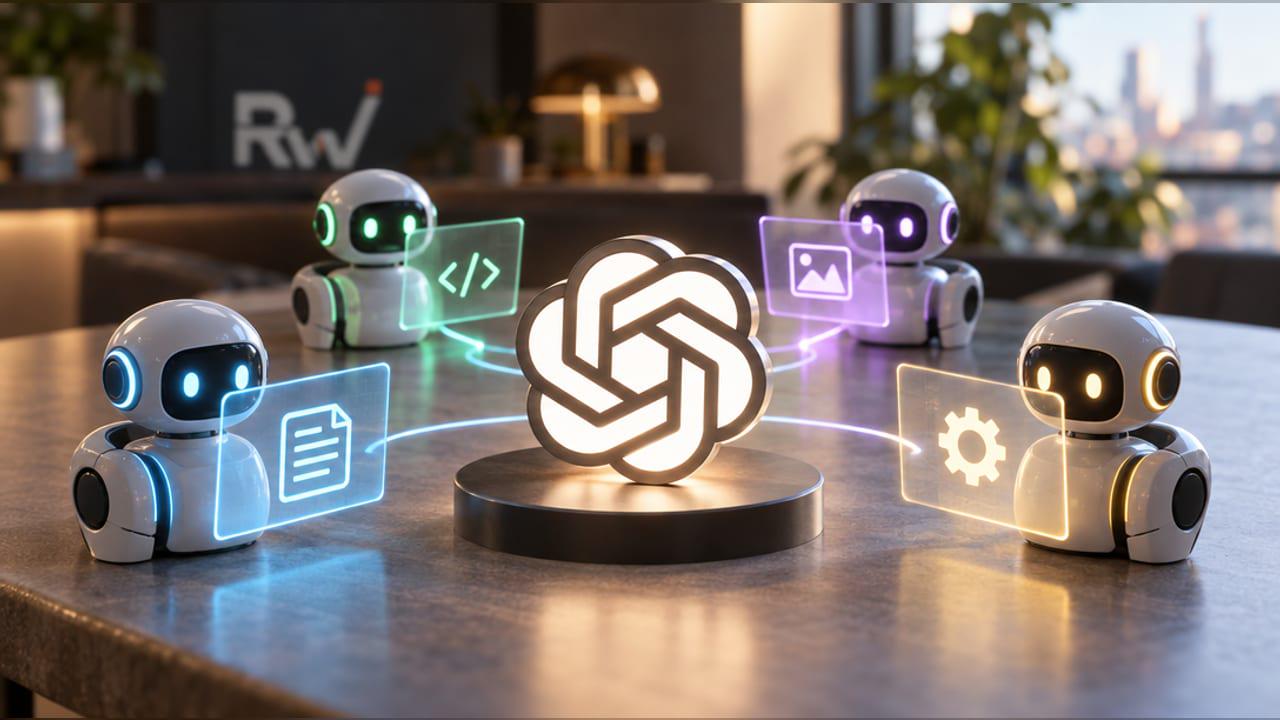
A recent report from Runtime Wire details an architectural update deployed by OpenAI to its GPT-6 Pro model within the ChatGPT interface. According to the source, this upgrade introduces parallel agents capable of executing distinct sub-tasks concurrently rather than relying on a single, sequential reasoning chain. The cited article indicates that when a user submits a complex prompt, the system now partitions the request into discrete components, assigns these components to separate agent instances operating simultaneously, and subsequently synthesizes the individual outputs into a unified response. The source further notes that this multi-agent capability is currently available within the Pro tier of the service, suggesting a deployment strategy focused initially on high-compute or advanced-use scenarios. A corresponding discussion thread on the r/OpenAI forum, which generated thirty-eight comments at the time of documentation, reflects early user observations regarding the latency reductions and output variations associated with this concurrent processing model.
The mechanism described in the report represents a departure from strictly linear generation paradigms. In traditional large language model inference, tokens are generated sequentially, and even when internal reasoning steps are employed, they typically follow a singular trajectory. The introduction of parallel agents implies a divide-and-conquer orchestration layer. An initial routing process must analyze the prompt, determine optimal partition boundaries, instantiate parallel workers, and manage a final aggregation phase. This architecture mirrors principles found in distributed computing and ensemble methods, where multiple independent processes contribute to a consolidated outcome. The theoretical advantage lies in computational efficiency for highly decomposable tasks and the potential for diverse representational approaches to be applied to different facets of a single problem simultaneously.
However, the limits of the current evidence must be carefully delineated. The primary source is a technology news report rather than a peer-reviewed empirical study or a formal technical white paper published by the developer. Consequently, the precise nature of the inter-agent communication, the algorithmic criteria used for task partitioning, and the mechanisms for resolving contradictions between parallel outputs remain unspecified. It is unknown whether the parallel agents operate with shared context windows or isolated states during their respective computations. Furthermore, while the Reddit discussion provides anecdotal user feedback, it does not constitute systematic benchmarking. Without controlled evaluations comparing the parallel agent architecture against standard sequential baselines across standardized metrics, claims regarding superior accuracy, reduced hallucination rates, or definitive speed improvements remain theoretically plausible but empirically unverified. The evidence establishes that the feature exists and describes its intended operational flow, but it cannot yet substantiate detailed performance characteristics.
When considering what this result implies for teaching or learning with AI, provided the link between parallel execution and educational utility is real, several theoretical frameworks outside of cognitive load or Vygotskian scaffolding become relevant. Specifically, the architecture aligns with theories of distributed cognition, which posit that cognitive processes are not confined to an individual mind but are spread across tools, environments, and other agents. In an educational setting, a student utilizing a parallel-agent system is interacting with a tool that structurally embodies distributed problem-solving. If a student prompts the system to analyze a historical event from economic, social, and political perspectives simultaneously, the parallel agents effectively simulate a multidisciplinary research team. This allows the learner to observe how complex inquiries can be decomposed into manageable, independent lines of inquiry before being synthesized.
This structural decomposition offers a distinct pedagogical affordance: it externalizes the planning and organization phases of complex academic work. Students frequently struggle not with the execution of individual research tasks, but with the architectural design of a multifaceted project. By observing how the AI partitions a prompt, learners might implicitly acquire strategies for task decomposition. However, this relies on the system making its routing and partitioning logic transparent to the user, a detail not confirmed by the current source material. If the parallel execution remains entirely opaque, the educational benefit may be limited to the quality of the final synthesized output rather than the modeling of the process itself.
Additionally, the parallel agent model introduces new considerations regarding epistemic vigilance in AI-assisted learning. When multiple agents generate text concurrently, the aggregation phase must reconcile potentially divergent facts, tones, or logical structures. For a student using this tool to draft literature reviews or synthesize scientific data, understanding that the final output is a stitched composite rather than a singularly reasoned argument is crucial. It necessitates a critical evaluation posture where the learner assesses the seams of the synthesis for coherence and factual consistency. The shift from a monolithic AI voice to a chorus of parallel agents complicates the attribution of errors and demands that students develop more sophisticated verification protocols.
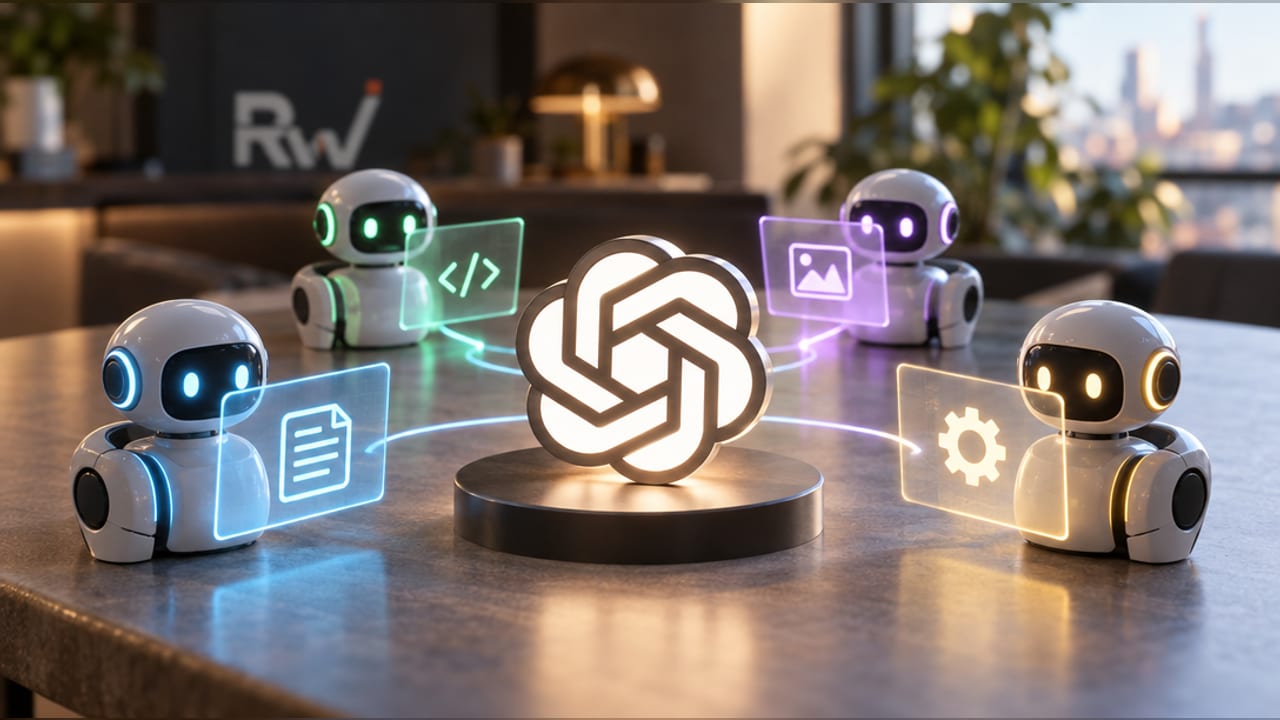
In conclusion, the reported addition of parallel agents to GPT-6 Pro marks a significant infrastructural evolution in commercial generative AI. While the current evidence is limited to journalistic reporting and preliminary user discourse, the underlying mechanism suggests a move toward distributed, concurrent processing within conversational interfaces. For educational applications, this development theoretically supports the modeling of complex task decomposition and aligns with distributed approaches to problem-solving. Realizing these pedagogical benefits, however, will require further empirical investigation into the transparency of the orchestration layer and the specific ways in which students interact with and critically evaluate multi-agent synthesized outputs.