
Field notes · October 11, 2026
OpenAI’s Top-Level Domain Applications and the Infrastructure of AI Education
OpenAI applied for fifteen new top-level domains through ICANN, including .gpt, .agi, and .agent. This research log examines the infrastructural implications of proprietary domain spaces for educational technology and institutional trust.
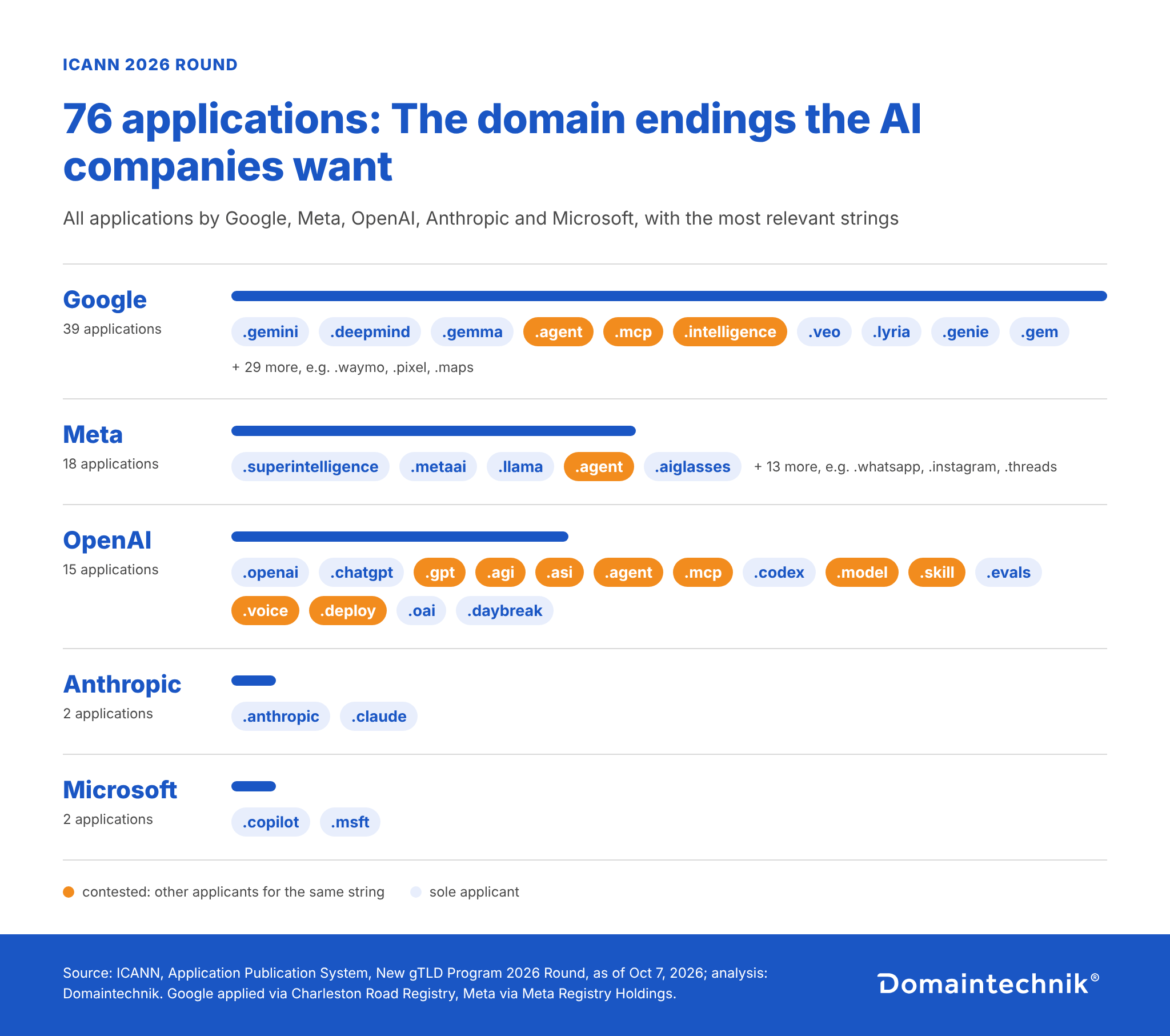
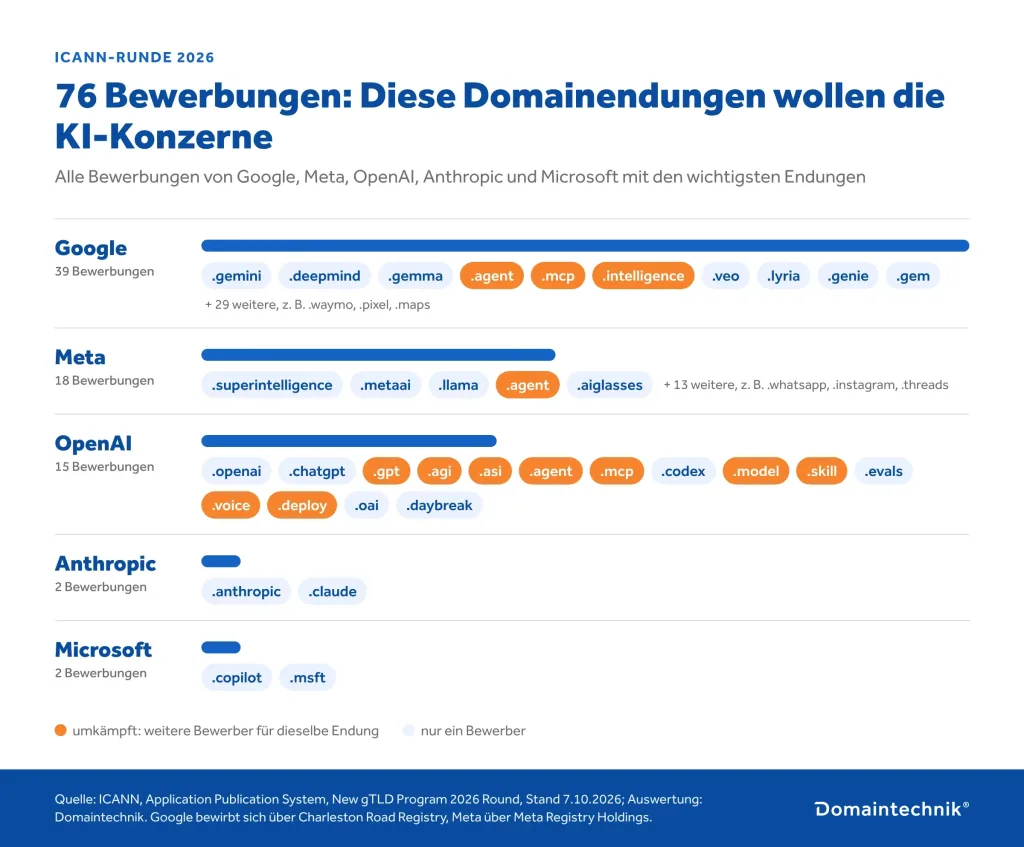
On October 7, the Internet Corporation for Assigned Names and Numbers (ICANN) published all applications for new generic top-level domains, marking the first application round since 2012. According to reporting by DomainTechnik, OpenAI submitted applications for fifteen distinct top-level domains. The specific strings requested by the company are .openai, .chatgpt, .gpt, .agi, .asi, .agent, .mcp, .codex, .model, .skill, .evals, .voice, .deploy, .oai, and .daybreak. The source notes several details regarding these filings. First, while .gpt is filed as a brand top-level domain, OpenAI is not the sole applicant; two other companies also applied for the .gpt string. Second, the .agent extension is identified as highly contested among applicants. These applications represent a significant move by an artificial intelligence laboratory to secure foundational internet infrastructure, extending its influence beyond model architecture and into the naming conventions of the web itself.
The theoretical significance of this event requires examining the mechanism of top-level domains within the broader architecture of the internet. A top-level domain functions as the highest level of the hierarchical Domain Name System. By applying for strings such as .agi, .mcp, and .evals, OpenAI is attempting to control the namespace for concepts central to its product ecosystem and research agenda. For instance, .mcp likely refers to the Model Context Protocol, a standard developed by the company to facilitate how artificial intelligence models interact with external data sources and tools. Similarly, .evals pertains to evaluation frameworks used to benchmark model performance. Securing these domains allows an organization to dictate the routing, authentication, and structural boundaries of services operating under those namespaces. When a single entity controls the top-level domain for a technological standard or a conceptual category like artificial general intelligence (.agi) or artificial superintelligence (.asi), it acquires gatekeeping authority over who can publish content or host services under that label.
However, the limits of the current evidence must be clearly delineated. An application to ICANN does not equate to delegation or operational control. The publication of applications on October 7 initiates a lengthy evaluation process involving technical review, public comment periods, and potential dispute resolution, particularly for contested strings. The fact that two other entities applied for .gpt indicates that contention resolution mechanisms will be triggered for that specific string. Furthermore, the source material provides the list of applications and brief contextual notes but does not detail OpenAI’s internal strategic rationale for each string, nor does it specify which domains are intended for strict internal use versus public registration. Therefore, any analysis of intent must remain inferential, grounded in the semantic meaning of the requested strings rather than confirmed corporate policy.
When linking this infrastructural development to teaching and learning with artificial intelligence, several implications emerge. Educational institutions increasingly rely on artificial intelligence tools for instructional design, student support, and administrative efficiency. The provenance and authenticity of these tools are paramount. If OpenAI successfully delegates domains like .chatgpt or .openai, educational technology deployments could utilize these namespaces to cryptographically assure users that a given service is officially sanctioned. In an environment where phishing and fraudulent educational tools pose genuine risks to student data privacy, a controlled top-level domain offers a structural mechanism for establishing trust. A university directing students to an interface hosted on a verified .openai domain reduces the cognitive burden on learners who must otherwise evaluate the legitimacy of third-party wrappers or unauthorized mirrors.
Conversely, the application for conceptually broad domains such as .agi, .agent, and .model raises concerns about the privatization of academic and technical vocabulary. In educational contexts, instructors teach students to navigate the landscape of artificial intelligence using these precise terms. If a single corporation controls the .agent top-level domain, the pedagogical framing of what constitutes an autonomous agent may become implicitly tied to that corporation’s commercial ecosystem. Educators would need to critically address how the architecture of the internet shapes the perceived authority of information. Teaching digital literacy in the age of generative artificial intelligence must now encompass an understanding of namespace governance. Students learning to deploy models or build agents should understand that the very addresses they use to access these technologies are subject to corporate acquisition and regulatory contestation.
Furthermore, the inclusion of .skill and .evals suggests a potential future where credentialing, competency tracking, and model assessment are routed through proprietary namespaces. If educational platforms adopt artificial intelligence agents to evaluate student work, hosting these evaluations under a standardized, potentially monopolized domain could centralize educational assessment infrastructure. While this centralization might streamline interoperability between different learning management systems, it simultaneously introduces systemic risk. Dependence on a single vendor’s top-level domain for critical educational functions means that any disruption, policy change, or pricing adjustment at the registry level could cascade across institutions relying on that namespace.
In conclusion, OpenAI’s application for fifteen top-level domains represents more than a branding exercise; it is an attempt to architect the spatial logic of artificial intelligence on the internet. For the field of education, this necessitates a dual approach. Institutions must leverage the potential security benefits of authenticated namespaces to protect learners, while educators must cultivate critical awareness regarding the consolidation of foundational terminology by private entities. As the ICANN evaluation process unfolds, the outcomes of these applications will materially shape the infrastructure through which educational artificial intelligence is delivered, governed, and understood.
Source: OpenAI applied for 15 new top-level domains, including .gpt, .chatgpt and .agi