
Trends · October 26, 2026
neocloud Shifts and Local AI Teaching Agents
The neocloud trend in GPU financing affects how schools in the United States plan infrastructure for local AI teaching agents and edtech applications.
In the United States, school districts and educational technology designers are increasingly exploring ways to run artificial intelligence teaching agents on local hardware rather than relying exclusively on major cloud providers. This shift requires careful attention to the broader market forces shaping the availability and cost of graphics processing units. One such force is the rise and volatility of the neocloud sector, a term describing newer, often smaller companies that build specialized cloud infrastructure primarily for artificial intelligence workloads. Understanding the financing and consolidation trends within this sector helps educators and technologists anticipate the long-term costs and reliability of the compute resources needed to support classroom AI tools.
What neocloud asks of teaching agents
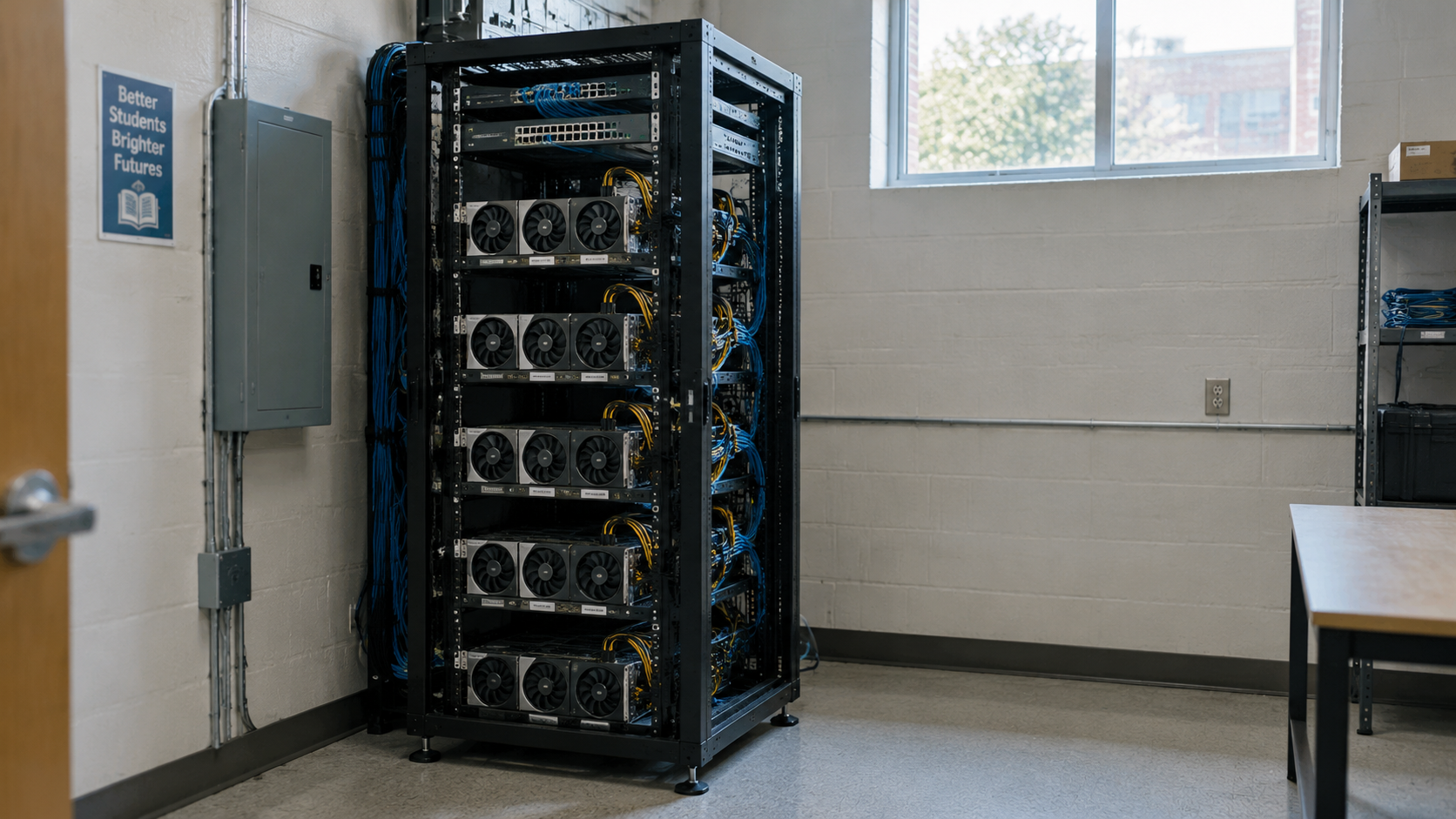
The concept of running AI locally in schools has gained traction as institutions seek to protect student data, reduce latency, and manage recurring expenses. However, local deployment still depends on acquiring capable GPUs, and the global supply chain for these chips is deeply intertwined with the strategies of large-scale AI infrastructure firms. When those firms secure massive amounts of capital or when smaller competitors face financial distress, the ripple effects influence hardware pricing, availability, and the overall stability of the compute ecosystem that educational institutions rely upon.

The Scale of GPU Financing and Market Consolidation
Recent reporting highlights the enormous scale of capital flowing into AI-focused infrastructure. According to Fox Business, SpaceX secured forty billion dollars in financing specifically designated for GPUs, while its leadership warned of impending consolidation across the AI cloud industry. This level of investment underscores how heavily the future of artificial intelligence depends on concentrated computing power. For schools and edtech developers, the implication is clear: the entities controlling the largest pools of GPU capital will exert significant influence over hardware markets and pricing structures.
Yahoo Finance reported on the same development, noting that the closure of this forty billion dollar debt deal was accompanied by sharp criticism directed at smaller infrastructure providers. When a single organization can marshal resources of this magnitude, it alters the competitive landscape. Educational institutions planning multi-year technology budgets must recognize that they are operating in an environment where a few dominant players are rapidly expanding their capacity. This expansion can drive up demand for specific hardware components, potentially making it more difficult or expensive for schools to procure the equipment necessary for local inference.
Furthermore, the consolidation warnings suggest that the market may soon feature fewer independent providers. If the industry coalesces around a handful of well-capitalized giants, schools could find themselves with limited options for purchasing or leasing compute resources. This lack of competition historically leads to higher prices and less flexibility, both of which are detrimental to educational budgets that are already constrained. Planning for local AI teaching agents therefore requires not just technical foresight but also an awareness of macroeconomic shifts in hardware financing.
Volatility Among Smaller Providers
While massive debt deals capture headlines, the fragility of smaller players presents a different set of challenges for educational planning. CNBC reported that stocks associated with these emerging infrastructure companies fell sharply after public warnings that more than two hundred of them face what was described as "guppy-level death." This vivid characterization points to a severe risk of insolvency among firms that attempted to enter the AI infrastructure market without sufficient capital reserves or differentiated services.
For a school district or an edtech startup, partnering with or relying on the hardware ecosystems supported by these smaller firms carries inherent risk. If a provider fails, the downstream effects can include sudden price spikes for remaining inventory, disruptions in supply chains, or the loss of technical support for specific configurations. Educational technology designers building platforms for local AI teaching agents must evaluate the financial health and market position of their hardware vendors. Relying on a fragmented market of undercapitalized providers might offer short-term cost savings, but it introduces long-term operational risks that can disrupt learning environments.
The volatility described in the CNBC report serves as a cautionary signal. It suggests that the rush to build AI-specific cloud infrastructure has outpaced the sustainable demand or financial viability for many entrants. As these companies struggle or exit the market, the resulting consolidation will likely benefit the largest players, reinforcing the dynamics discussed in the Fox Business and Yahoo Finance reports. Schools must navigate this transition carefully, ensuring that their infrastructure investments are resilient against sudden market contractions.
Strategic Infrastructure Planning for Education
Given these market realities, how should schools and edtech designers proceed? The primary takeaway is that infrastructure planning for local AI teaching agents cannot be treated as a static, one-time purchase. It must be viewed as a dynamic strategy that accounts for ongoing shifts in GPU financing and industry consolidation. Institutions should prioritize hardware architectures that offer flexibility, allowing them to adapt if specific vendors fail or if market prices fluctuate dramatically.
One approach is to invest in standardized, widely supported hardware rather than proprietary systems tied to vulnerable startups. By choosing components that are broadly utilized across industries, schools can better ensure a steady supply of replacements and upgrades. Additionally, educational technologists should explore hybrid models that balance local processing with fallback options, ensuring that teaching agents remain functional even if specific infrastructure links are compromised.
Understanding the financial pressures facing the neocloud sector also highlights the importance of efficiency. If hardware becomes more expensive or harder to source due to consolidation, optimizing the software that runs on it becomes paramount. Techniques such as model quantization, efficient memory management, and targeted fine-tuning can allow schools to achieve strong educational outcomes using less powerful or fewer GPUs. Initiatives like the AI Literacy Index can help institutions assess their readiness and guide their technical investments based on actual pedagogical needs rather than speculative hardware trends.
Ultimately, the intersection of massive corporate financing and the precarious state of smaller infrastructure providers creates a complex environment for educational technology. By closely monitoring these developments, schools in the United States can make informed decisions that protect their budgets, safeguard student data, and ensure that local AI teaching agents remain a reliable component of modern instruction. The goal is not to predict every market fluctuation, but to build systems resilient enough to withstand them, keeping the focus firmly on student learning and teacher support.