
Agent theory · November 19, 2026
Mediated Learning and AI Agents in the Classroom
Vygotsky’s theory of mediated learning explains how tools shape thought, offering a framework for teachers and researchers evaluating AI agents that coordinate classroom work or assist instruction.
This essay examines Vygotsky’s concept of mediated learning and its implications for artificial intelligence agents operating in classrooms. It is written for teachers and researchers who design, deploy, or study AI systems that tutor students, assist educators, or coordinate group work.
When we discuss educational technology, the conversation often drifts toward information delivery—how fast an AI can retrieve a fact or how accurately it can summarize a text. But learning is not merely the absorption of data. It is a process shaped by the tools we use to think. Lev Vygotsky’s foundational text, Mind in Society: The Development of Higher Psychological Processes, argues that human cognition does not develop in isolation. Instead, higher psychological processes are mediated by cultural tools, including language, symbols, and physical artifacts. When an AI agent enters a classroom as a tutor or a teacher’s assistant, it does not just deliver content; it becomes a mediating tool that fundamentally alters how students interact with knowledge and with one another. Understanding this mediation is essential for anyone building or evaluating these systems, including research efforts like Classroom Observatory that seek to measure the impact of AI on instructional dynamics.
Tools That Shape Thought
In Mind in Society, Vygotsky draws a sharp distinction between elementary mental functions, which humans share with other animals, and higher mental functions, which are uniquely human because they rely on symbolic tools. A child pointing at an object begins with a simple grasping motion, but when a caregiver interprets that motion as communication, the gesture becomes a sign. Language itself is the ultimate mediating tool, transforming raw experience into structured thought.
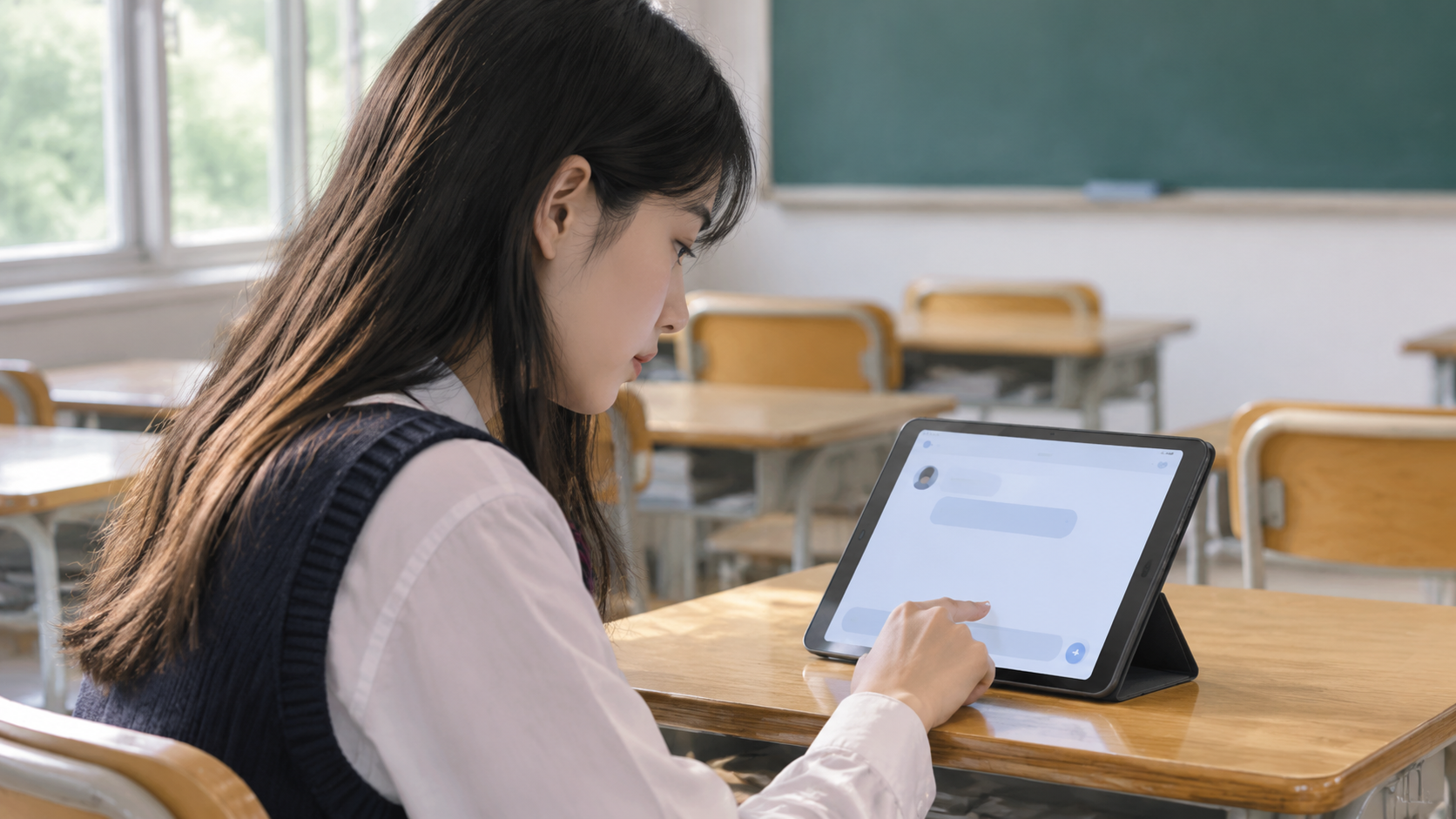
An AI agent in a classroom operates within this exact tradition. It is a new kind of symbolic tool. When a student uses an AI tutor to work through a math problem, the interaction is not simply a transaction of answers. The AI mediates the student’s thinking by structuring the problem, translating abstract concepts into conversational language, and providing a symbolic interface through which the student organizes their own reasoning. For teachers, recognizing the AI as a mediating tool rather than a mere answer engine changes how they integrate it into lesson plans. The focus shifts from what the AI knows to how the AI shapes the student’s cognitive process. If the tool encourages passive consumption, it mediates poorly. If it requires the student to articulate their reasoning, it serves as a robust instrument for cognitive development.

From Interpersonal to Intrapersonal
A core principle in Vygotskian psychology is that every function in a child’s development appears twice: first on the social level, between people, and later on the individual level, inside the child. Mind in Society emphasizes that internalization is the mechanism by which external, socially mediated activities become internal cognitive structures. This trajectory from the interpersonal to the intrapersonal is critical for understanding how AI agents should be designed to assist learners.
When an AI coordinates work in a classroom, it initially occupies the interpersonal space. It acts as a conversational partner, prompting students, asking questions, and modeling strategies. Over time, the goal is for the student to internalize these prompts. The AI’s external questioning should gradually become the student’s internal self-regulation. An accessible academic overview from Simply Psychology on the Zone of Proximal Development highlights how scaffolding principles apply to adaptive systems, noting that support must eventually be withdrawn so the learner can perform independently. If an AI agent constantly provides the structure without allowing the student to take over the cognitive work, it disrupts the internalization process. The student remains dependent on the external tool rather than developing the higher psychological processes the tool was meant to foster.
For researchers, this means evaluating an AI tutor cannot stop at measuring immediate test scores. We must ask whether the AI’s presence leads to lasting changes in how students think when the AI is turned off. The peer-reviewed article "Scaffolding student learning: Instructional approaches and issues" operationalizes Vygotskian scaffolding into concrete instructional strategies. These strategies emphasize that effective support is contingent, meaning it responds directly to the learner's current performance, and is gradually faded as competence increases. Translating these rules into the logic of an AI agent ensures that the system respects the developmental arc from shared, mediated activity to independent mastery.
Designing Mediation, Not Just Delivery
The practical takeaway for educators and developers is that AI agents must be architected as mediators, not just distributors of curriculum. This requires a shift in how we prompt and constrain these models. An AI assisting a teacher should not simply generate worksheets. It should help the teacher design interactions where students use the AI to test hypotheses, debate interpretations, or structure complex projects. The AI becomes part of the social environment Vygotsky described, acting as a more knowledgeable other that facilitates dialogue.
Furthermore, the mediating role of AI extends to how it coordinates group work. When an AI manages tasks among several students, it structures their social interaction. By assigning roles, prompting specific students to explain their reasoning to peers, or highlighting disagreements that require resolution, the AI shapes the interpersonal dynamics that drive collective learning. According to the instructional approaches detailed in "Scaffolding student learning," the quality of this support determines whether the collaboration results in genuine cognitive growth or mere division of labor.
Ultimately, Vygotsky’s theory reminds us that tools are never neutral. They carry the logic of their design into the minds of those who use them. As AI agents become permanent fixtures in educational settings, teachers and researchers must evaluate them based on the quality of the mediation they provide. The most effective AI will not be the one that holds the most information, but the one that best transforms social interaction into independent thought, honoring the deep psychological processes that make learning possible.