
Field notes · October 13, 2026
LumaBrowser: Open-Source AI Ecosystems and Implications for Education
The open-source release of LumaBrowser on GitHub consolidates multiple large language model interfaces into a single local application, raising significant questions about educational access, data privacy, and pedagogical integration.
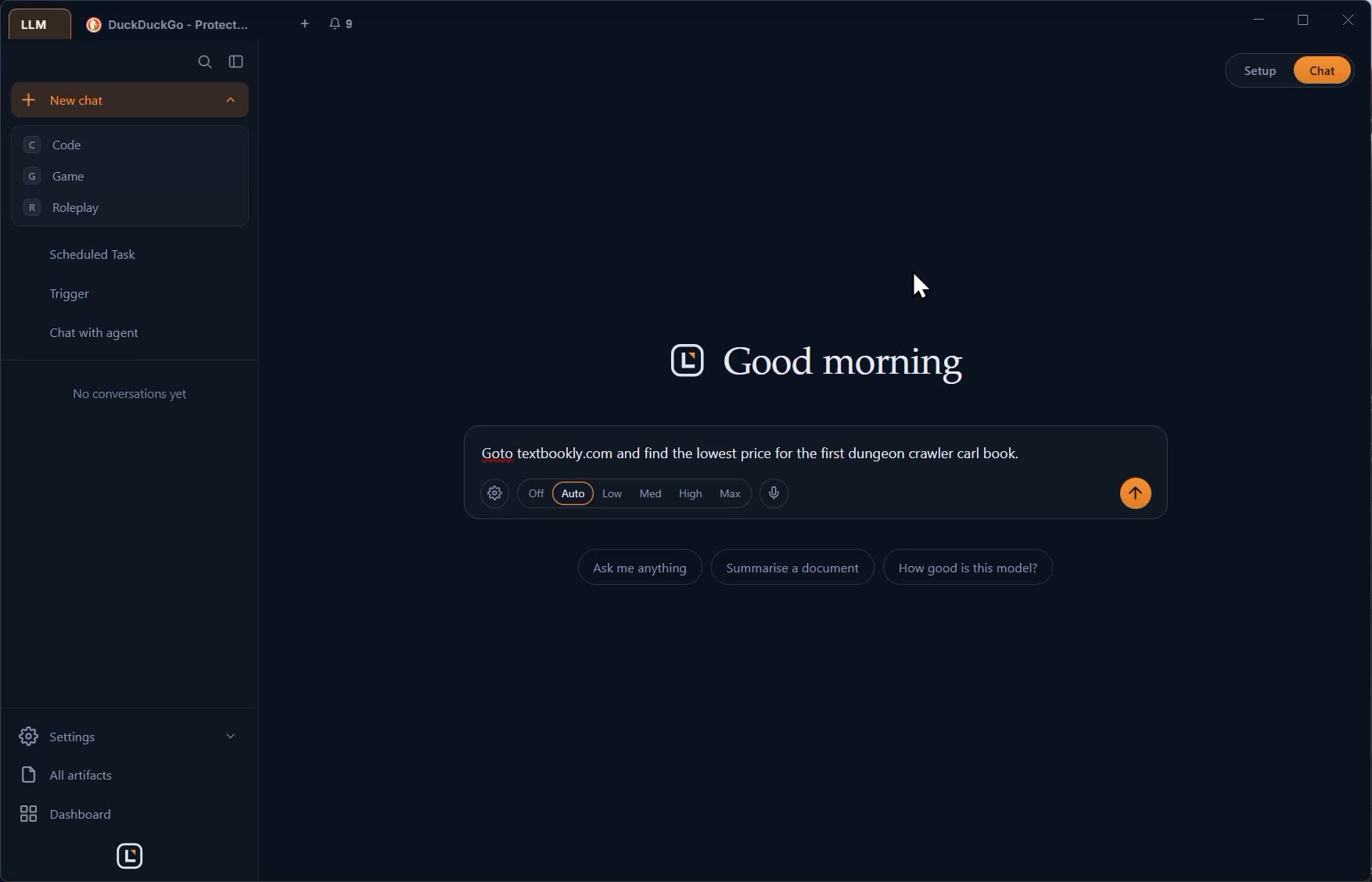
A recent announcement on the r/LocalLLaMA community forum details the transition of LumaBrowser, a software project developed by amurgola, to an open-source model publicly hosted on GitHub. The developer describes the application as effectively encapsulating the entire ecosystem of major artificial intelligence providers—specifically referencing Anthropic and ChatGPT—into a single, unified project. According to the source, LumaBrowser has been in development and distribution for approximately one year prior to this open-source release. During that period, the developer reports that the software accumulated several thousand installations and generated a substantial volume of user feedback, which informed its iterative development. The creator explicitly characterizes the tool as an "Anthropic/ChatGPT in a box," asserting that it is not merely a superficial wrapper but a comprehensive consolidation of the broader artificial intelligence ecosystem. The decision to open-source the project was framed by the developer as a long-overdue step, acknowledging that public availability should have occurred earlier in the project's lifecycle. The repository is now accessible via the provided GitHub URL, allowing independent verification, modification, and deployment by the broader community.
From a theoretical standpoint, the architecture described by the developer represents a significant shift in how end-users interact with proprietary artificial intelligence models. By aggregating multiple commercial endpoints—such as those provided by Anthropic and OpenAI—into a single local interface, LumaBrowser functions as a meta-client or unified gateway. The mechanism relies on routing user queries through a centralized local application that manages authentication, API calls, and response rendering across different underlying large language models. This architectural choice abstracts the complexity of managing disparate platforms, theoretically reducing the cognitive load required to switch between different AI systems for varied tasks. However, the limits of the evidence presented in the source must be carefully noted. The claims regarding the software's comprehensiveness, stability, and security are based entirely on the developer's self-reporting within a community forum. While the assertion of "several thousand installs" suggests a degree of adoption, there is no independent empirical data provided regarding error rates, latency introduced by the wrapper, or the specific nature of the "tremendous amount of feedback" that shaped the tool. Furthermore, describing a client-side aggregator as "the entire ecosystem wrapped into a single project" conflates the user interface layer with the backend infrastructure; the application still depends fundamentally on the external APIs and computational resources of the respective AI companies.
When considering the implications of such tools for teaching and learning with artificial intelligence, the open-source release of a unified AI browser introduces both distinct affordances and notable challenges. In educational contexts, the fragmentation of AI tools often presents a barrier to adoption. Educators and students may find themselves navigating multiple interfaces, each with different interaction paradigms, subscription models, and terms of service. A consolidated environment like LumaBrowser theoretically lowers this barrier by providing a single point of entry. From a pedagogical perspective, this could facilitate comparative analysis exercises, where students are tasked with evaluating how different foundational models respond to identical prompts. Such comparative prompting is a recognized method for developing critical AI literacy, helping learners understand that artificial intelligence outputs are not monolithic truths but probabilistic generations influenced by specific training data and alignment protocols. By housing these interactions in one interface, educators can more easily design structured assignments that require cross-model evaluation without forcing students to manage multiple browser tabs, accounts, and billing portals.
However, the integration of third-party wrappers into educational environments necessitates rigorous scrutiny regarding data privacy and institutional compliance. Educational institutions are typically bound by strict regulations governing student data, such as FERPA in the United States or GDPR in Europe. When a local application routes queries to commercial APIs, the data governance policies of both the wrapper developer and the underlying AI provider apply. Because LumaBrowser is now open source, institutions possess the ability to audit the codebase to ensure that no unauthorized telemetry or data logging occurs at the application layer. This transparency is a primary advantage of the open-source transition reported in the source. Nevertheless, the underlying reliance on proprietary APIs means that student prompts and model responses still traverse external servers controlled by companies like Anthropic and OpenAI. Educators must therefore ensure that the use of any such tool aligns with their institution's acceptable use policies and data processing agreements.

Additionally, the open-source nature of the project invites considerations regarding sustainability and technical support in academic settings. While community-driven projects benefit from distributed contributions, they often lack the guaranteed uptime and dedicated support structures of enterprise educational technology platforms. If a university were to adopt LumaBrowser for a course, the responsibility for maintaining compatibility with evolving API versions from the underlying providers would fall either on the open-source community or on local institutional IT staff. The developer's note that the project has evolved significantly over a year based on user feedback indicates active maintenance, but the long-term viability of such aggregators remains contingent on the continued cooperation and API accessibility granted by the commercial entities they wrap. Ultimately, while LumaBrowser represents an interesting infrastructural development for individual users seeking streamlined access to multiple AI models, its translation into formal educational practice requires careful navigation of privacy, sustainability, and pedagogical alignment.
Source: My "Anthropic/ChatGPT in a box" is... now open source and publicly hosted on Github.