
Trends · October 19, 2026
“internship” Policy Shifts and AI Career Readiness
Singapore’s year-long internship policy responds to AI disrupting entry-level work, challenging educators to rethink agent-supported career readiness.
In Singapore, a recent surge in search interest around the query “internship” reflects more than seasonal student anxiety. It signals a structural shift in how a nation prepares its workforce for an economy where artificial intelligence is rapidly automating entry-level tasks. The Ministry of Education has responded by mandating year-long placements for polytechnic students beginning in 2025, a move explicitly framed as necessary to equip graduates with deeper, more complex skills for a rapidly evolving economy. For educators designing curricula that integrate teaching agents and AI tools, this policy pivot offers essential reading. It demonstrates that when generative models absorb routine cognitive labor, the educational response must extend the duration and depth of human experiential learning.
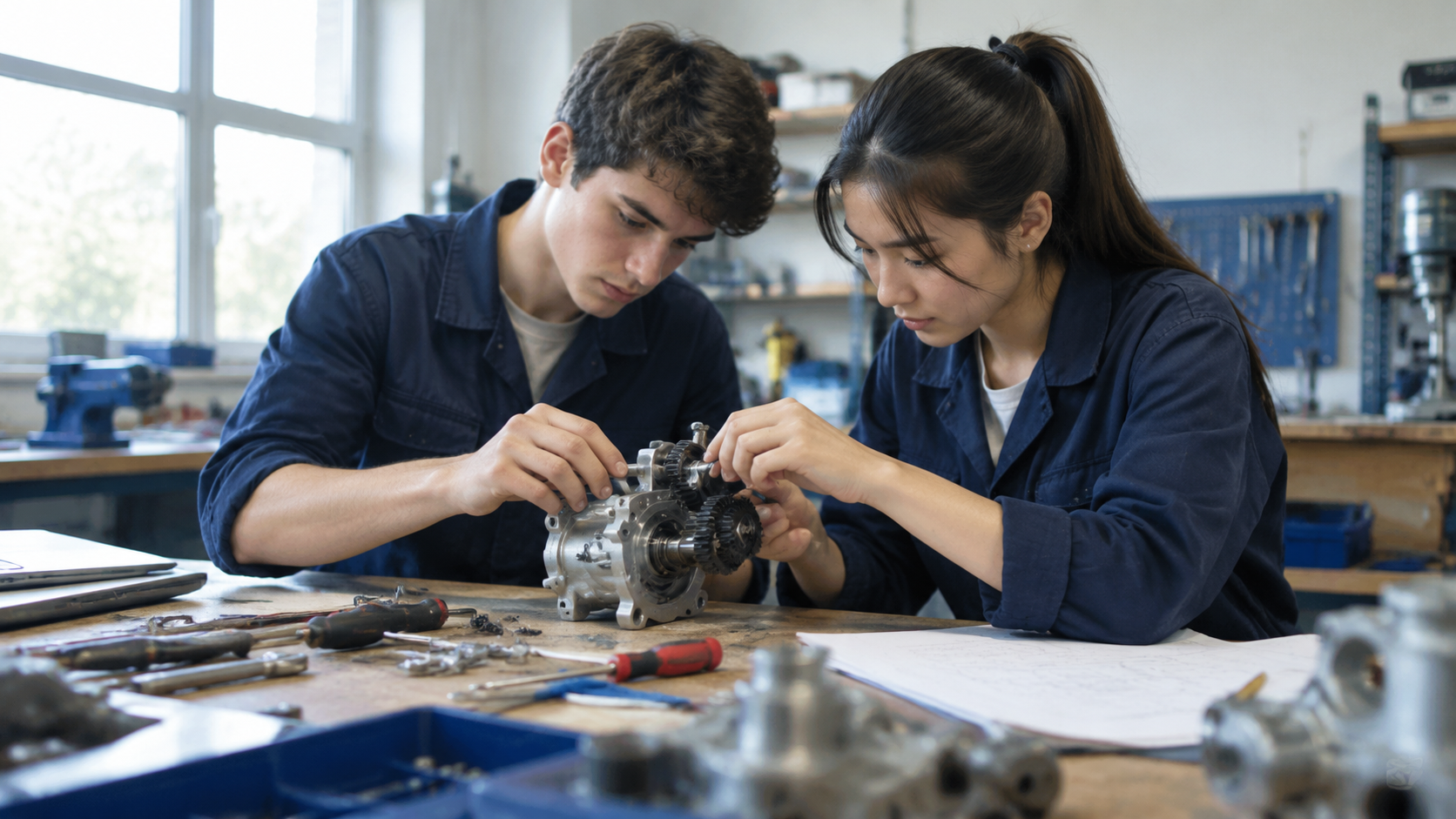
The Policy Response Behind the “internship” Trend
The decision to lengthen practical training is a direct countermeasure to technological displacement. According to reporting by The Straits Times, year-long internships will be offered to 3,000 tertiary students specifically to counter the AI threat to entry-level jobs. Channel NewsAsia corroborates this scale, noting that the initiative spans institutes of technical education, polytechnics, and universities as AI reshapes the foundational rungs of the employment ladder. The primary source for this shift is the Ministry of Education’s official press release on enhanced placements, which details the transition from shorter stints to full-year immersions for polytechnic students starting in 2025. The Ministry frames this not merely as additional time in an office, but as a qualitative upgrade designed to foster higher-order problem-solving capabilities that current AI systems cannot easily replicate.
This national strategy does not exist in isolation. It operates within the broader architecture of the SkillsFuture Level-Up Programme, an institutional portal detailing Singapore's comprehensive mid-career and pre-employment upskilling strategy. SkillsFuture contextualizes the extended placement policy within ongoing national efforts to future-proof workers against technological disruption, including artificial intelligence. When educators examine these sources together, a clear pedagogical mandate emerges: the traditional, brief practicum is no longer sufficient to bridge the gap between academic theory and professional viability in an automated economy.

Student Behavior and the Arms Race for Experience
While policymakers adjust structural frameworks, students are already altering their behavior in anticipation of a tighter job market. The Business Times reports on a growing phenomenon termed “internmaxxing,” asking whether accumulating multiple placements—sometimes five or more—is becoming an arms race among Singaporean youth. This behavioral trend underscores the anxiety driving the search volume for the term. Students recognize that standard credentials are losing their signaling power when AI can perform the baseline tasks those credentials once guaranteed competence in.
For teachers and curriculum designers, this arms race presents a dual challenge. First, there is the logistical burden of helping students secure meaningful, sequential experiences rather than repetitive, low-value roles. Second, there is the pedagogical imperative to ensure that each experience builds upon the last, developing competencies that remain distinctly human. If students are simply cycling through brief roles performing tasks that an algorithm could execute, the accumulation of experiences yields diminishing returns. Educators must therefore design preparatory coursework that elevates the student's capacity before they enter the workplace, ensuring they are positioned to handle complex, ambiguous projects during their extended tenure.
Implications for Agent-Supported Career Readiness Curricula
The intersection of extended workplace immersion and artificial intelligence demands a fundamental rethinking of career readiness curricula. If AI agents are increasingly deployed in corporate environments to handle data processing, basic coding, and routine communications, the role of the human trainee shifts from execution to orchestration, critical evaluation, and interpersonal negotiation. Educators utilizing teaching agents to simulate workplace scenarios must align their tools with this new reality. Frameworks like the AI Literacy Index become vital for assessing whether students possess the foundational understanding required to work alongside, rather than be replaced by, intelligent systems.
Designing agent-supported curricula for year-long programs requires moving beyond short-term task completion. Teaching agents should be programmed to scaffold long-term project management, ethical reasoning, and cross-functional collaboration over months, mirroring the extended timeline of the new policy. For instance, an AI tutor might guide a student through a simulated semester-long product development cycle, introducing friction and complexity that require human judgment to resolve. The goal is to use artificial intelligence in the classroom to prepare students for a workplace where artificial intelligence is ubiquitous but insufficient on its own.
Furthermore, educators must address the psychological dimensions of this transition. The pressure to engage in “internmaxxing” suggests high levels of student stress regarding employability. Curricula supported by teaching agents should incorporate reflective practices, helping students synthesize their prolonged workplace experiences into coherent professional identities. Rather than viewing AI solely as a threat that necessitates longer training, educators can frame it as a tool that, when mastered during an extended placement, accelerates a student's transition from novice to indispensable contributor.
Ultimately, the search trends originating in Singapore serve as a bellwether for global education systems. As automation continues to erode the traditional entry-level tier of the knowledge economy, the policy choice to deepen and extend experiential learning offers a pragmatic blueprint. For researchers and teachers building the next generation of career readiness programs, the lesson is clear: preparing students for an AI-saturated workforce requires giving them the time, the complex challenges, and the agent-supported guidance necessary to develop skills that machines cannot easily automate.
Sources
- Year-long internships offered to 3,000 tertiary students to counter AI threat to entry-level jobs
- 5 internships and counting: Is ‘internmaxxing’ in Singapore becoming an arms race?
- 3,000 year-long internships to be offered to tertiary students as AI reshapes entry-level jobs
- Enhanced Internships to better prepare polytechnic students for the workforce
- SkillsFuture Level-Up Programme