
Tutorials · November 7, 2026
How to Run a Qwen 27B Q4 Local Model on Old Laptops
Learn how to set up and run a Qwen 27B Q4 local model on low-spec laptops for coding assignments using Ollama and llama.cpp.
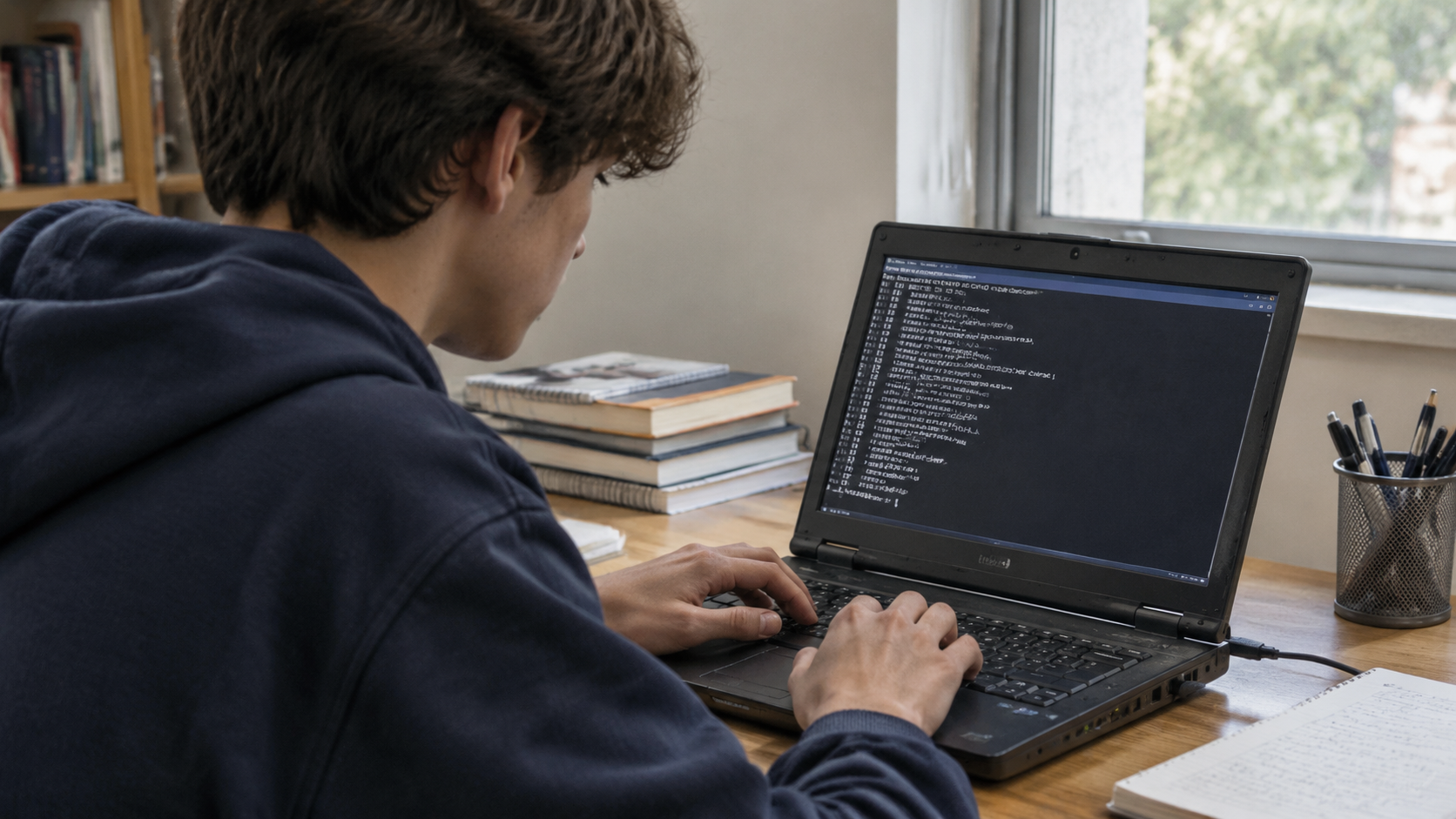
A recent discussion on the r/LocalLLaMA subreddit highlighted running a Qwen 27B Q4 local model on a low-end laptop, where people are asking how to handle this setup. If you are working on a personal machine with low-end specifications, this tutorial will show you how to replicate that setup for coding assignments.
What you need
Because a 27-billion parameter model is large, the inference engine must offload the workload to your system RAM and CPU when GPU memory is limited. You will also need enough storage space on your drive to hold the downloaded model file.
You will need one of two software tools:
- Ollama: A command-line tool that simplifies downloading and running models. The official Qwen documentation recommends Ollama for running specific quantized versions like
qwen2.5-coder:27b-instruct-q4_K_M. - llama.cpp: The underlying C++ inference engine that powers many local AI tools. According to the llama.cpp README, it allows you to load GGUF-formatted Q4 models directly via the command line without relying heavily on a GPU.

How to Qwen 27B Q4 local model
Follow these steps to install the software, download the model, and configure it for your low-spec hardware.
- Install Ollama. Visit the official Ollama website and download the installer for your operating system. Once installed, open your terminal or command prompt. As documented in the Qwen guide for running models locally with Ollama, this tool handles the backend configuration automatically.
- Pull the quantized model. In your terminal, type the command to pull the specific 4-bit quantized coding model. The Qwen documentation specifies using the tag
qwen2.5-coder:27b-instruct-q4_K_M. Runollama run qwen2.5-coder:27b-instruct-q4_K_M. Ollama will download the necessary files. Wait for the download to complete before proceeding.
- Alternative: Use llama.cpp directly. If you prefer manual control over memory allocation, download the latest release of llama.cpp from its GitHub repository. The llama.cpp README explains how to use the command-line interface to load GGUF model files. You will need to download a compatible Q4 GGUF file for the 27B model from a trusted repository.
- Configure GPU offloading. On a machine with limited VRAM, you cannot offload all model layers to the GPU. When using llama.cpp, you must specify the number of layers to offload using the command-line flags detailed in the llama.cpp README. Start by offloading a small number of layers to the GPU, leaving the rest to process on your CPU and system RAM. If you are using Ollama, check the official help documentation to confirm the exact environment variable or flag used to limit VRAM usage.
- Limit system RAM usage. To prevent your operating system from freezing during assignments, you can restrict how much system memory the model consumes. Consult the llama.cpp README to find the exact syntax for capping your RAM usage so the host operating system remains responsive.
- Run your first prompt. Once the model is loaded into memory, type your coding prompt into the terminal. Expect slow generation speeds on low-end hardware. Plan your activities accordingly, allowing time for the model to generate responses.
Where this goes wrong
The most common failure point when running a Qwen 27B Q4 local model on low-end hardware is memory exhaustion. If you attempt to offload too many neural network layers to a GPU with limited memory, the system may crash or fall back to disk swapping, which slows generation down to a halt. Always verify your layer offload settings against the llama.cpp README before running the model.
Another issue is context window size. Using a large context window on limited RAM with a 27B model will exceed your memory limits. Keep your prompts and context windows short.
Here is a worked example. If you need help understanding a basic Python loop, do not paste an entire project into the prompt. Instead, use a targeted request:
Write a Python for-loop that prints numbers 1 through 5. Add a comment explaining each line.
Because the generation speed is slow, keeping the requested output brief ensures you do not wait several minutes for a response. This approach yields better outcomes than massive, unfocused queries.
Running large language models on aging hardware requires patience and precise memory management. By sticking to 4-bit quantization, carefully limiting GPU offloading, and keeping prompts concise, you can provide yourself with a fully offline coding assistant without needing modern hardware.