
Tutorials · October 18, 2026
How to Run a Qwen 27B Local Laptop for Class
Learn how to set up and run a Qwen 27B local laptop for high school coding exercises using Ollama, based on official documentation and community discussions.
A recent video showing an RTX Spark running Qwen 3.8 27B Q4 at roughly 4 tokens per second caused a stir on the r/LocalLLaMA subreddit. For a high school computer science teacher hoping to use a Qwen 27B local laptop for classroom coding exercises, seeing a machine struggle to generate text that slowly can be discouraging. A recent r/LocalLLaMA thread recorded 40 comments where people were asking how to handle this issue.
Before setting anything up, there is a critical clarification to make regarding the model itself. As documented in the official QwenLM Qwen2.5 Repository, a 27B Qwen variant does not actually exist. The available sizes include 32B, 14B, 7B, and smaller variants. When people online discuss running "Qwen 27B," they are generally referring to the 32B model quantized down to fit into consumer VRAM, or they are confusing it with another architecture. This tutorial will guide you through setting up the 32B model (quantized to 4-bit) to achieve usable speeds for a Qwen 27B local laptop environment in your classroom.
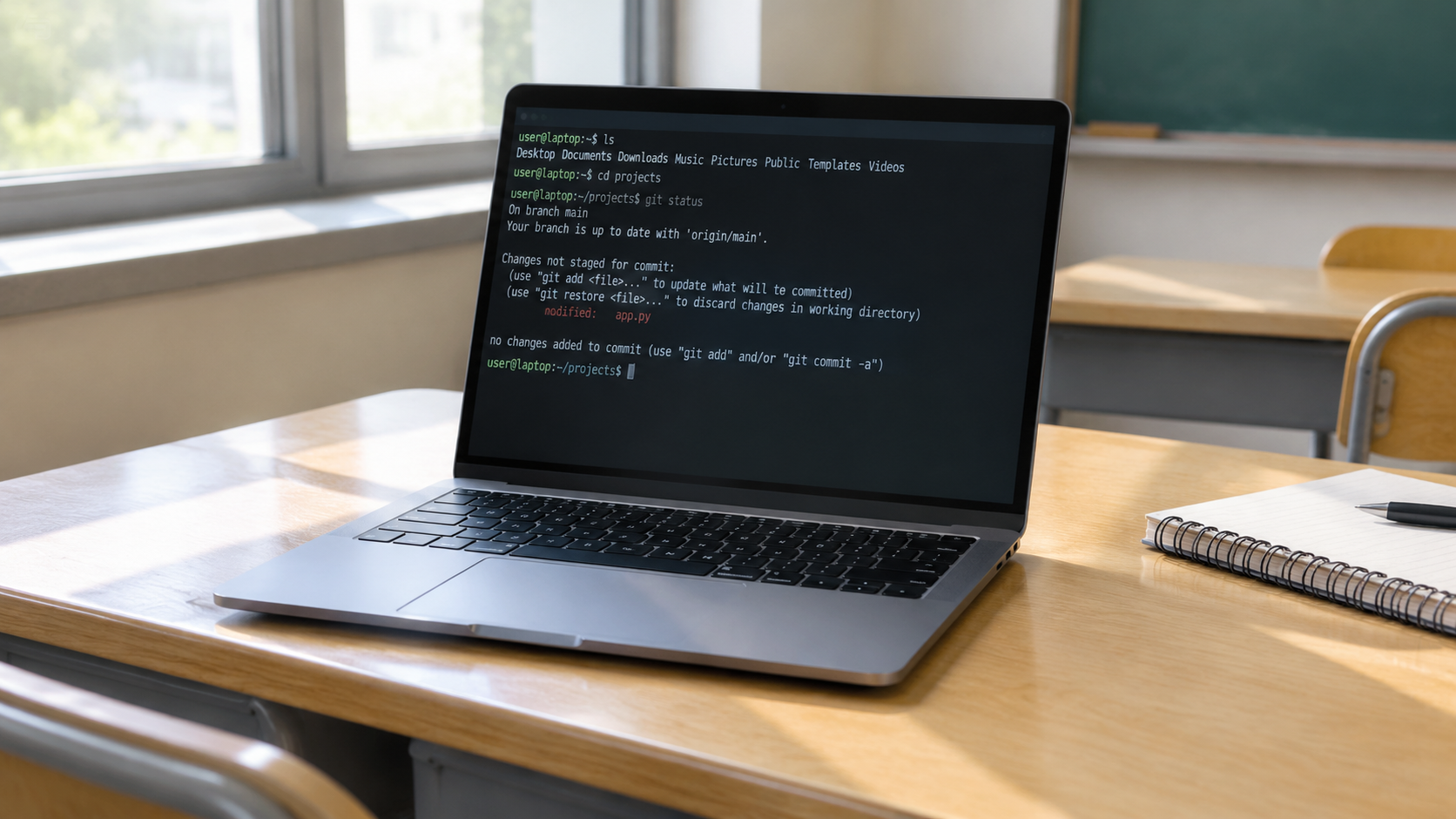
What you need
- Hardware: A laptop with an NVIDIA RTX GPU. Check the official QwenLM Qwen2.5 Repository for specific system requirements.
- Software: Ollama. According to the Ollama Official Documentation, this is the standard method for running these models locally on consumer GPUs via the command line.
- Model: A Qwen 2.5 model tag available in the Ollama library. Check the Ollama Official Documentation for supported tags.
- Drivers: Up-to-date NVIDIA GPU drivers installed on the host machine.
How to Qwen 27B local laptop
Follow these steps based on the Ollama Official Documentation and the QwenLM Qwen2.5 Repository to get your environment running for student exercises.
- Install Ollama: Navigate to the official Ollama website and download the installer for your operating system. Run the installer and follow the on-screen prompts. Once installed, Ollama runs as a background service on your machine.
- Verify GPU detection: Open your terminal or command prompt. Type
ollama psafter running a model later to ensure the GPU is being utilized. You can also check your NVIDIA control panel or usenvidia-smiin the terminal to confirm your driver recognizes the card. - Pull the model: In your terminal, type
ollama pull qwen2.5:32b. The Ollama Official Documentation notes that pulling the model downloads the necessary weights. Ensure you have disk space and a stable internet connection. If you specifically want to test the limits of your hardware, you may need to pull a smaller parameter size likeqwen2.5:14b. - Run the model interactively: Type
ollama run qwen2.5:32bin your terminal. This starts an interactive chat session. The first message will take longer to process (prefill) as the model loads into memory. - Check performance metrics: After asking a question and receiving a response, check the official Ollama help for supported methods to view performance metrics such as evaluation rate in tokens per second.
- Integrate with coding tools: For classroom use, you do not need to stay in the terminal. The QwenLM Qwen2.5 Repository documents using Hugging Face Transformers or vLLM. For simple local setups, students can connect IDE extensions to the local Ollama API endpoint. Check the Ollama Official Documentation for the exact API endpoint URL.
Where this goes wrong
The most common failure point when attempting to run a Qwen 27B local laptop setup is VRAM exhaustion. Always verify where your layers are loaded using ollama ps while the model is running.
Classroom Worked Example
Here is a practical exercise you can copy for your students. This example uses the local model to help debug a Python script, keeping all data strictly on the school's hardware.
Student Prompt:
I am writing a Python function for our class to calculate the factorial of a number using recursion, but it throws a RecursionError when I input 0. Here is my code:

def factorial(n):
    return n * factorial(n-1)

print(factorial(5))

Please explain why this fails and provide the corrected code.
Expected Model Behavior:
The model should identify the missing base case (if n == 0: return 1). Because this is running locally via Ollama, the response generates without sending student code to external cloud APIs, preserving privacy while providing real-time tutoring. If the response takes more than a few seconds to begin generating, check your VRAM usage to ensure the model fits on your hardware.