
Field notes · October 16, 2026
Heterogeneous GPU Offloading for Extended AI Context
A community-developed patch for llama.cpp enables tensor-parallel inference across mixed Nvidia and AMD hardware via RPC, offloading speculative drafters to an integrated GPU to expand context windows without performance loss.
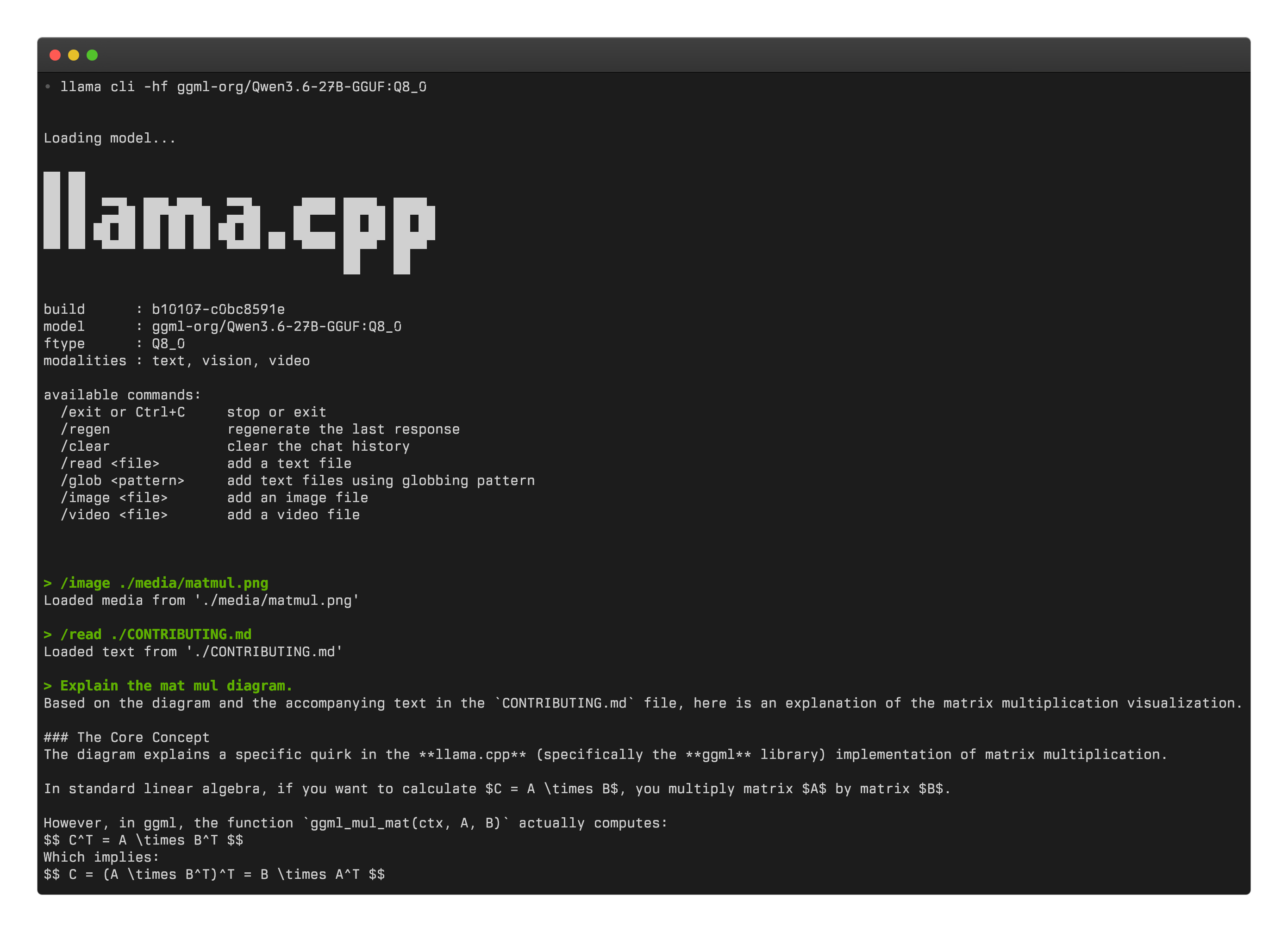
A recent technical report shared on the r/LocalLLaMA forum details a method for extending the context window of locally hosted large language models by utilizing heterogeneous hardware configurations. The author describes running main model weights in tensor parallelism across two Nvidia RTX 4060 graphics cards while using Remote Procedure Call (RPC) offloading to send speculative decoding drafters to the AMD Strix integrated graphics processor on the host machine. According to the post, this configuration freed approximately two to three gigabytes of VRAM on the primary Nvidia GPUs, allowing the available context length to increase from 150,000 tokens to 195,000 tokens. The author states that this expansion was achieved at no cost to tensor-parallel inference speed. The implementation relies on a patched fork of the llama.cpp repository, maintained by Henrique Simoes, which modifies the standard RPC behavior. The author notes that mixing Nvidia and AMD hardware via RPC previously restricted users to layer-level split modes, but the new patch maintains tensor-mode splitting across the heterogeneous devices. Furthermore, the author attributes significant portions of the configuration work—including troubleshooting drivers for a recently released 10Gbps USB network interface controller—to assistance provided by AI coding agents during development sessions.
The theoretical mechanism underlying this result combines tensor parallelism with speculative decoding, distributed across a heterogeneous local area network or direct-attach fabric. Tensor parallelism partitions the weight matrices of a neural network across multiple processing units, requiring high-bandwidth, low-latency interconnects to synchronize activations during the forward and backward passes. Speculative decoding accelerates autoregressive generation by employing a smaller, faster draft model to propose sequences of tokens, which the larger target model then verifies in parallel. If the draft tokens are accepted, throughput increases; if rejected, the computational overhead remains minimal because verification is highly parallelized. In standard single-node deployments, both the main model and the drafter compete for the same limited pool of VRAM. By offloading the drafter to an otherwise idle AMD Strix integrated GPU via RPC, the architecture physically separates the memory requirements of the two models. This spatial decoupling prevents the drafter from consuming the VRAM required for the key-value cache of the main model, thereby permitting a longer context window. The reliance on a 10Gbps USB NIC highlights the bandwidth constraints inherent in RPC-based offloading; while tensor parallelism across identical GPUs typically utilizes NVLink or PCIe switches, routing drafter proposals over a 10-gigabit Ethernet link introduces latency that must remain below the threshold where speculative gains are negated by network transit times.
The limits of the evidence presented in this community report must be carefully delineated. The data consists of a single user’s self-reported benchmark on a specific hardware topology—two RTX 4060 cards and an AMD Strix APU—utilizing an experimental, third-party fork of llama.cpp. There is no peer-reviewed validation, no standardized benchmarking suite applied, and no statistical analysis of variance across different prompt distributions or batch sizes. The claim of "no perf cost" likely refers to token-generation throughput rather than time-to-first-token, which may be affected by the initialization of the RPC connection and the latency of the 10Gbps USB link. Additionally, the stability of such a heterogeneous RPC setup under sustained educational workloads remains untested. The reliance on non-existent or nascent drivers for the 10Gbps USB NIC further underscores the fragility of this configuration. It represents a proof-of-concept engineered through iterative AI-assisted troubleshooting rather than a production-ready deployment strategy.
Despite these evidentiary limitations, the implications for teaching and learning with AI are substantial when considering the trajectory of local educational infrastructure. Expanding the context window from 150,000 to 195,000 tokens without sacrificing generation speed directly impacts the feasibility of deploying comprehensive, privacy-preserving AI tutors in school environments. A 195,000-token context can encompass entire textbooks, complete semester-long student interaction histories, and extensive institutional policy documents simultaneously. In pedagogical scenarios requiring deep document analysis—such as historical source evaluation, complex scientific literature reviews, or longitudinal tracking of student writing development—the ability to hold all relevant texts within the active memory of a local model eliminates the need to chunk information or rely on external retrieval mechanisms that might introduce latency or privacy vulnerabilities.
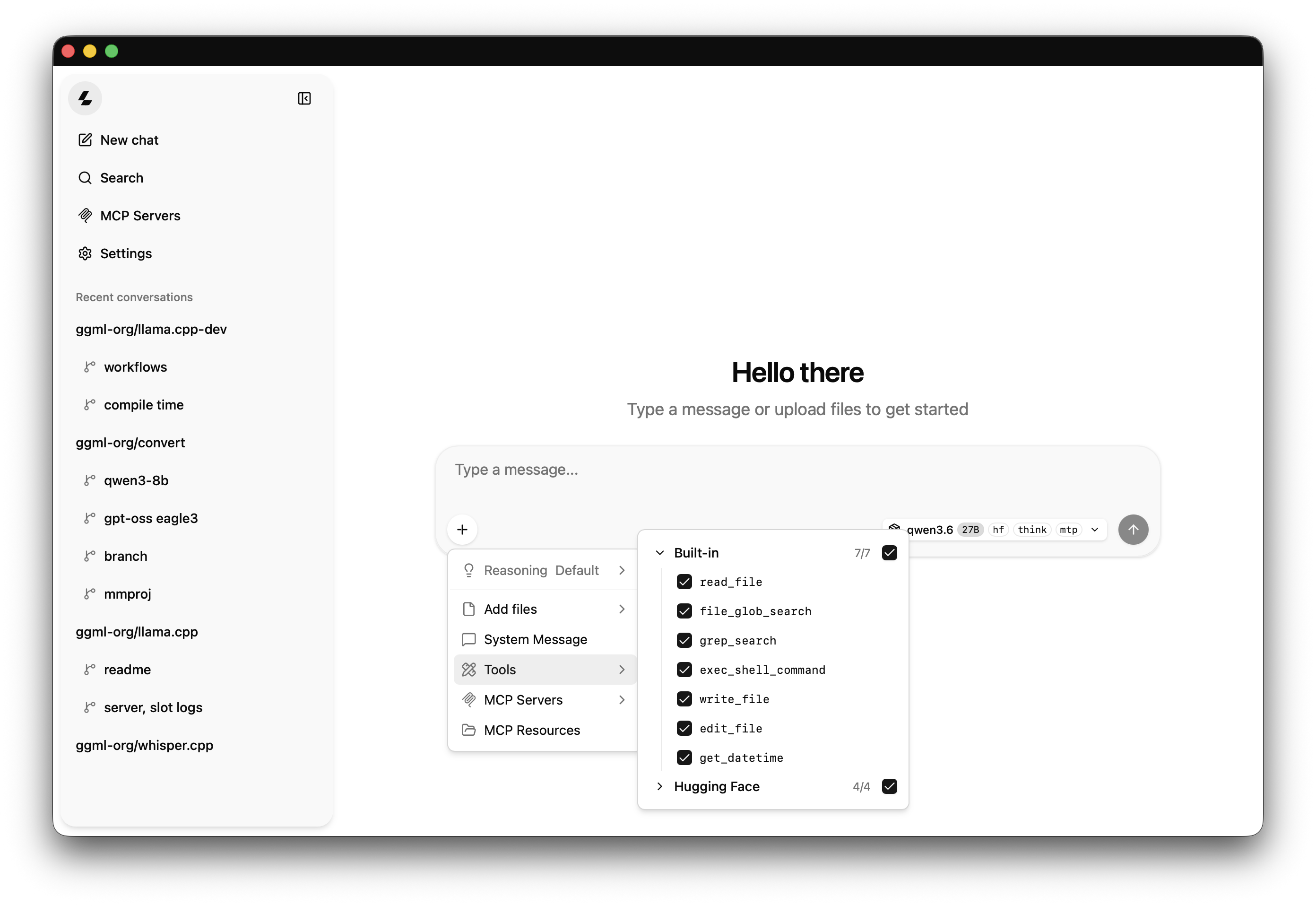
Furthermore, the methodology described in the post illustrates a paradigm shift in how educational technology infrastructure can be provisioned. Schools frequently possess heterogeneous fleets of aging or mixed-vendor hardware. The ability to pool disparate computational resources—an older AMD laptop acting as a drafter node for a newer Nvidia desktop hosting the main weights—via RPC suggests a decentralized approach to school AI clusters. Rather than requiring monolithic, expensive server-grade GPUs to achieve long-context inference, institutions could theoretically aggregate existing classroom hardware. However, the complexity of configuring tensor-parallel RPC across mixed architectures, as evidenced by the author's need for AI agent assistance to navigate driver issues, indicates that the current barrier to entry remains prohibitively high for typical IT departments. For educational technologists and researchers, this result signals that while the architectural principles for highly capable, private, local AI systems exist, the software abstraction layers required to make heterogeneous hardware pooling accessible to schools are still in their infancy. The integration of AI agents into the infrastructure setup process itself, as noted by the author, points toward a future where the deployment of complex educational AI systems is mediated by other AI systems, fundamentally altering the technical competencies required of educators and administrators managing these tools.