
Field notes · November 4, 2026
Codex Environment Training and Data Controls
OpenAI maintains a distinct training toggle for Codex environments that operates independently of the primary ChatGPT data control, raising specific concerns for educational privacy.
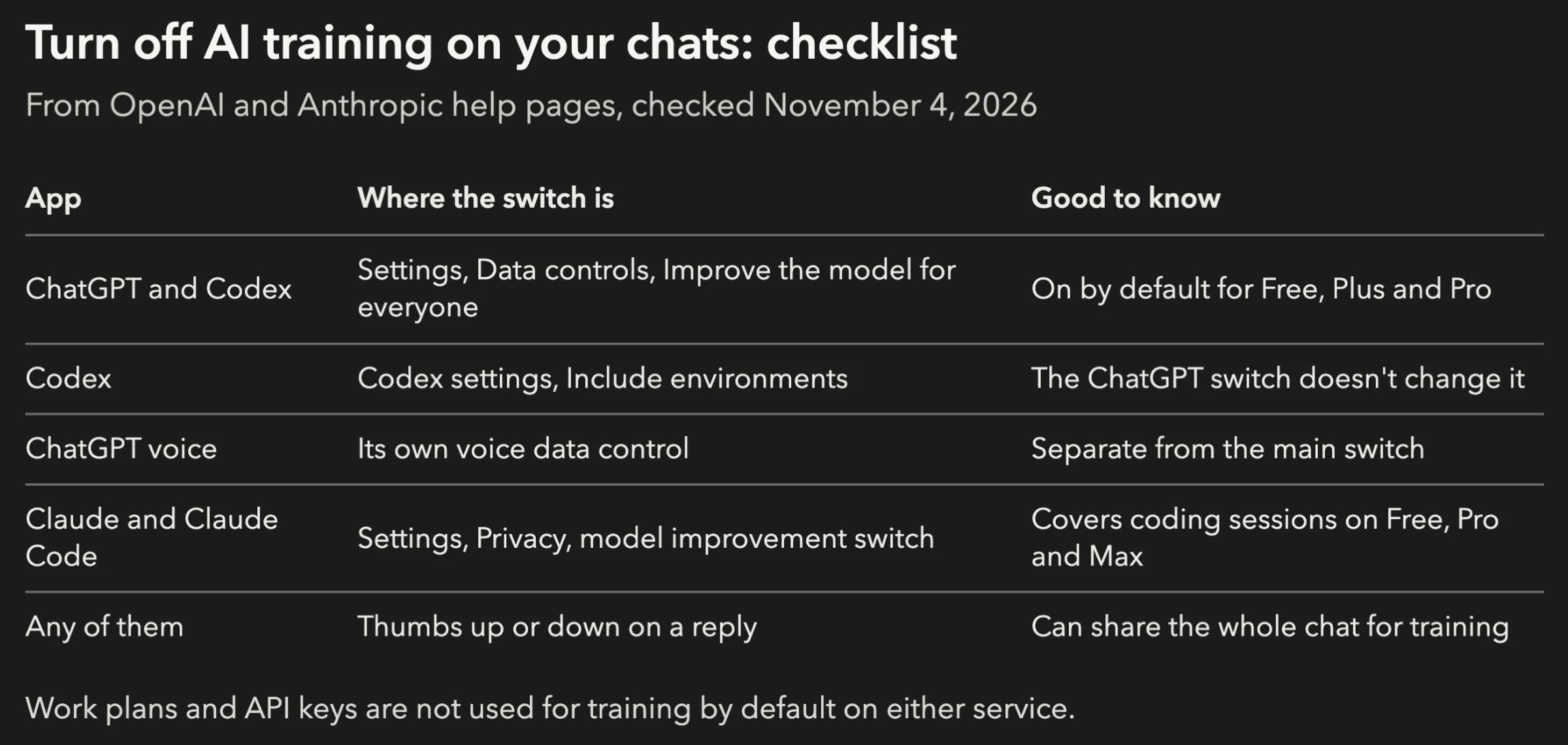
A recent investigation documented on the AI Parabellum platform and discussed within user communities has identified a secondary training configuration for OpenAI’s Codex system. According to the source, while the standard ChatGPT interface relies on a single toggle labeled "Improve the model for everyone" located under Settings, Data controls, the Codex agent operates with an additional, distinct parameter. The report states that on Free, Plus, and Pro subscription tiers, Codex does follow the primary ChatGPT setting, which is enabled by default. However, Codex also possesses its own separate setting designated as "Include environments," located within the specific Codex settings menu. This finding emerged after users observed that the primary training toggle appeared to revert to an active state autonomously, prompting a review of OpenAI’s official help documentation. The source indicates that this secondary toggle governs whether the operational environment in which Codex executes tasks is utilized for future model training.
The mechanism underlying this dual-setting architecture reflects the functional distinction between conversational language models and agentic coding systems. A standard chatbot processes natural language prompts and generates text responses within a relatively constrained interaction loop. An agentic system like Codex, however, requires access to a broader operational context—often including file systems, execution sandboxes, terminal outputs, and dependency structures—to complete software engineering tasks. The "Include environments" setting therefore controls a fundamentally different class of data than the conversational history governed by the primary toggle. When enabled, it permits the ingestion of the structural and environmental context in which code is written, tested, and debugged. This environmental data is highly valuable for training subsequent iterations of coding agents, as it provides the model with examples of how code interacts with operating systems, libraries, and project architectures, rather than merely how code is requested or explained in natural language.
The evidence presented in the source material is primarily derived from user observation and a review of publicly available help pages, rather than from a formal empirical study or an explicit architectural white paper published by the company. Consequently, the limits of this evidence must be acknowledged. The exact scope of what constitutes an "environment" in this context remains somewhat opaque; it is not entirely clear from the cited report whether this includes only sandboxed execution logs or extends to local repository structures when Codex is integrated into external development environments. Furthermore, the observation that the primary toggle appeared to turn itself back on suggests potential instability or asynchronous synchronization in the user interface, though this could also reflect updates to terms of service or backend policy changes that were not immediately communicated to the end user. Without direct access to the telemetry or the precise legal definitions provided in the enterprise agreements, researchers must treat these findings as indicative of the system's design intent rather than definitive proof of its data handling behavior in all edge cases.
For educational contexts, the existence of a separate environmental training toggle carries significant implications. When students or educators utilize AI coding agents in laboratory settings, coursework, or research projects, the code they generate and the environments they configure often contain proprietary, unpublished, or personally identifiable information. A student working on a novel algorithm for a thesis, or a class collaborating on a software project containing institutional data, may assume that disabling the general ChatGPT training toggle protects their work from being ingested into future models. The discovery of the "Include environments" setting reveals that this assumption may be incorrect if the secondary toggle is left in its default state. Educational institutions deploying these tools must therefore update their digital literacy curricula and data governance policies to explicitly address agentic configurations, ensuring that both instructors and students understand the layered nature of data consent in modern AI platforms.
Beyond immediate privacy concerns, this architectural reality touches upon the broader theoretical issue of data provenance and intellectual property in AI-assisted learning. When an AI agent learns from the execution environments of its users, it effectively aggregates the problem-solving strategies, debugging workflows, and architectural decisions of those users. In a pedagogical setting, this means that the unique ways a cohort of students approaches a programming challenge could theoretically become part of the training distribution for the next version of the tool. While this aggregation might improve the model's general utility, it complicates the assessment of individual student originality. If a future iteration of the agent suggests a solution that was heavily influenced by the aggregated environmental data of previous students, the boundary between legitimate AI assistance and the unauthorized reuse of peer intellectual labor becomes blurred. Educators must therefore consider not only how students use AI, but how the AI uses the students' operational contexts.
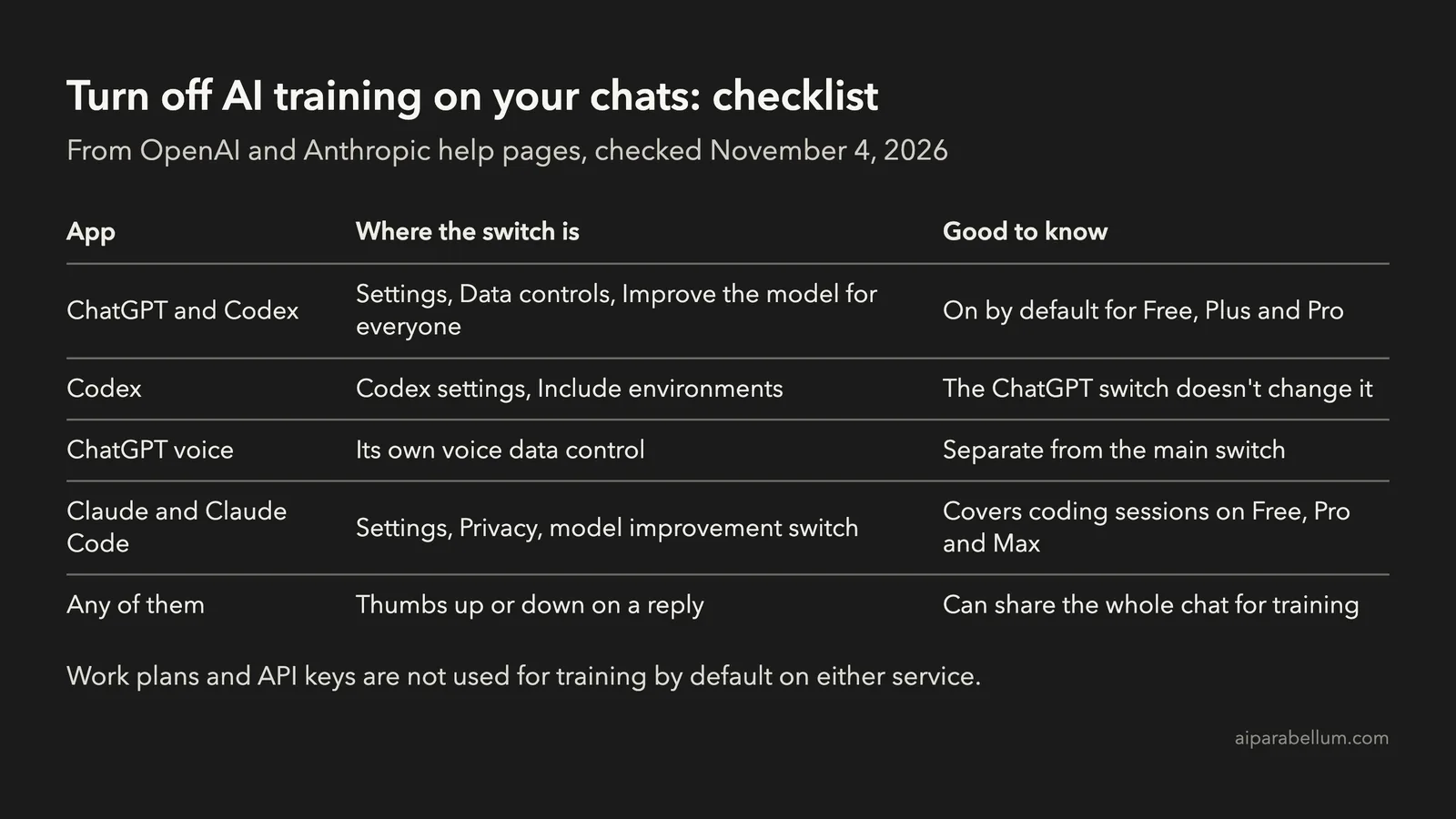
Ultimately, the identification of the Codex-specific training setting underscores a critical gap in current educational technology frameworks. Privacy guidelines designed for conversational AI are insufficient for agentic AI systems that interact deeply with computational environments. As universities and schools increasingly integrate coding agents into computer science and engineering programs, administrators cannot rely solely on top-level application settings to ensure compliance with student data protection regulations such as FERPA or GDPR. A granular understanding of how different modules within an AI ecosystem handle data is required. The transition from chatbots to autonomous agents necessitates a corresponding transition in how educational institutions audit, configure, and teach about the data flows inherent in artificial intelligence tools.